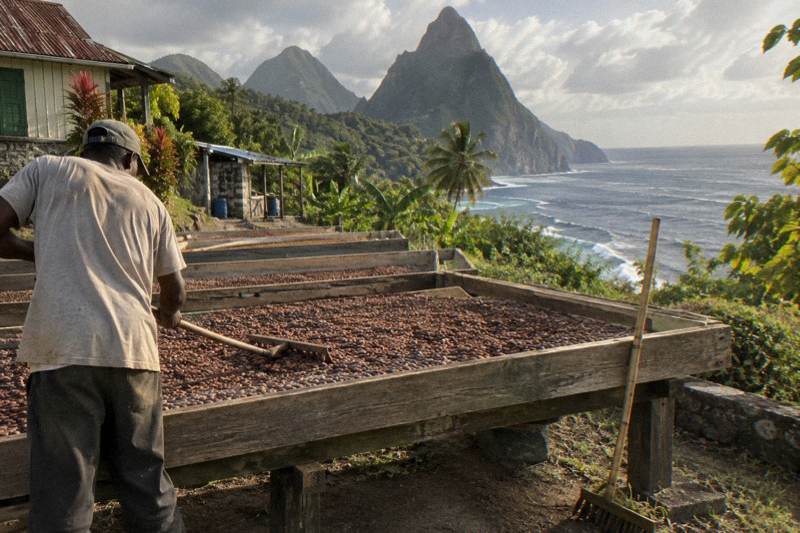
Allergies, Vegan And Dairy-Free At Chocolate Sessions
Dietary check before booking decides whether a session works. This guide sorts the island's chocolate experiences by which ones include a meal, which leave you to arrange food, and what to ask an operator before you pay.
Short answer
No bookable chocolate session on the island states a vegan, dairy-free or allergen option, so the decision rides on structure: pick a session whose included meal you can eat, or one with no meal at all, and ask the operator about ingredients before booking. Five products include lunch or a local meal; two name lunch as excluded. All prices are US dollars.
Dietary needs shape a chocolate day more than almost anything else, because the sessions cluster around shared meals, tasting plates and one bar that every guest makes from the same batch of beans. The island's whole cocoa scene, from estate workshops to rum-paired tastings, is the backdrop here, and the guide below works through the dietary question product by product.
| Fact | Detail |
|---|---|
| Island cocoa arrival | 1660s, per the FAO story on the cocoa revival |
| Project Chocolat site | Six acres of the Rabot Estate, Soufriere |
| Project Chocolat opening | Daily, 08:00 to 17:00 |
| Sessions including a named meal | 5 products listed here |
| Sessions naming lunch as excluded | 2 products listed here |
| Stated vegan or allergen options | None stated by any product |
| Dietary advice | Ask the operator before booking |
| Currency | US dollars |
Can You Do Vegan Chocolate Making In St Lucia?
No chocolate session bookable on this island states a vegan, dairy-free or allergen-adapted option in its own description, so a vegan visit is built on structure rather than a labelled menu. Choose a session whose included meal you can eat, or one with no meal at all, and ask the operator directly about milk powder, butter and shared equipment before booking. The island's cocoa itself is a plant product; the chocolate made from it often is not.
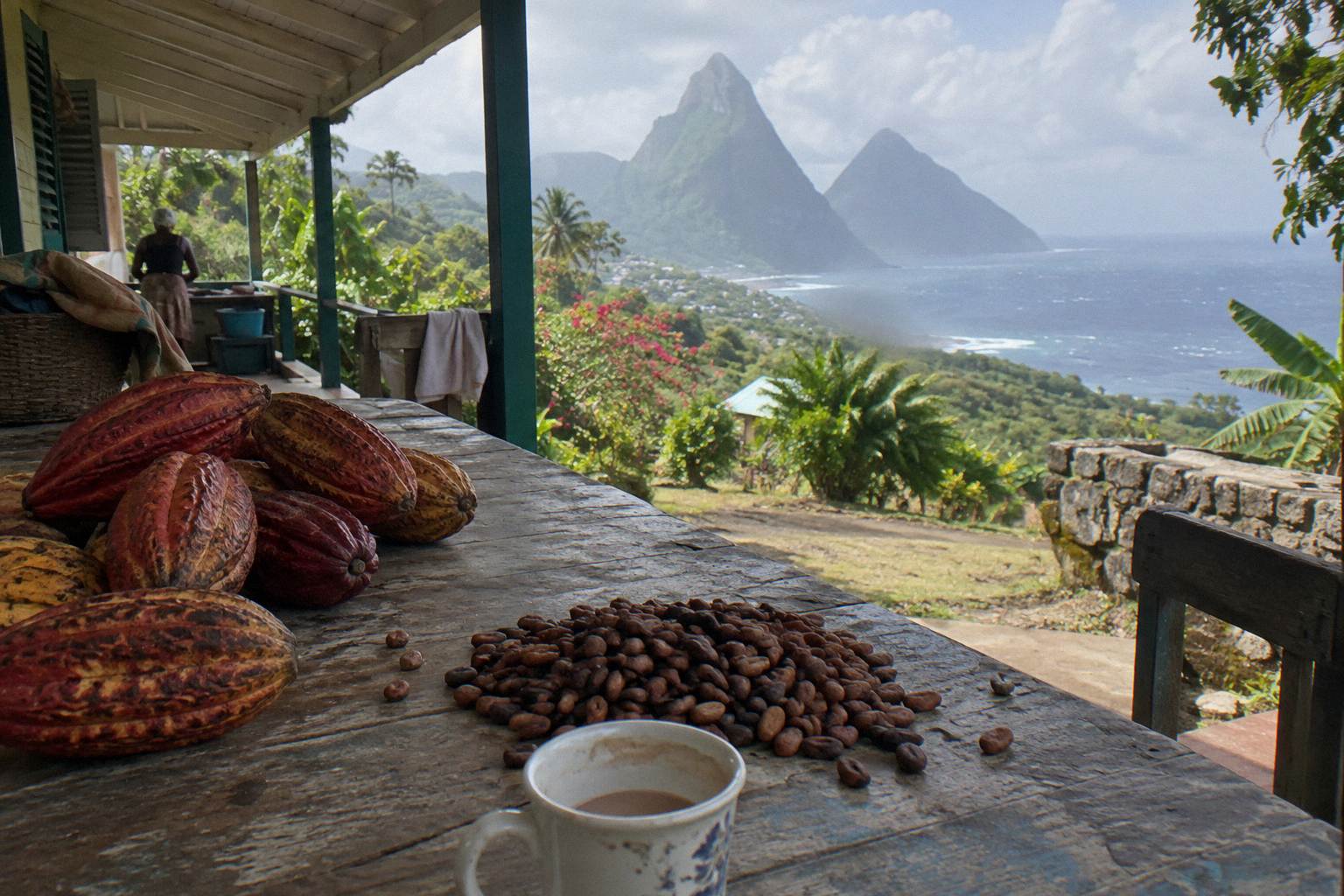
The plain starting point is that plain cocoa is vegan by origin. The bean comes from a tree, it is fermented, dried, roasted and ground, and at that stage nothing animal has touched it. Traditional cocoa tea, the island drink made from freshly ground cocoa sticks and spices such as nutmeg, cinnamon and bay leaf, is described by the FAO story on cocoa on Saint Lucia as a tradition that spans generations, built on beans and spices. The dairy question arrives at the bar-making stage, where milk chocolate and milk powder enter most hotel and estate recipes, and again at lunch, where a shared Creole spread may carry butter, cream or fish.
So the planning logic for a vegan visitor has three clean branches. One: a short bar-making session with no meal attached, where the only question is what goes into the bar. Two: a full-day product with an included meal, where both the bar and the plate need checking. Three: a sightseeing day with a chocolate stop, where the chocolate element is a tasting rather than a making session, and the meal is the only thing to interrogate. Each branch needs one message to the operator, and the section on questions below gives the exact wording that gets a useful answer.
None of this is unique to St Lucia. Chocolate makers everywhere share grinders, moulds and tempering tables, and a bar labelled dark in a café can still carry traces of milk from the previous batch. What is specific to this island is how compact the scene is: the estates know their own supply chains, the operators answer their own phones and messages, and a question asked before payment is usually answered by someone who has stood in the room where your bar will be made. That is the main reason to ask before booking rather than on arrival.
Which Chocolate Sessions Include A Meal?
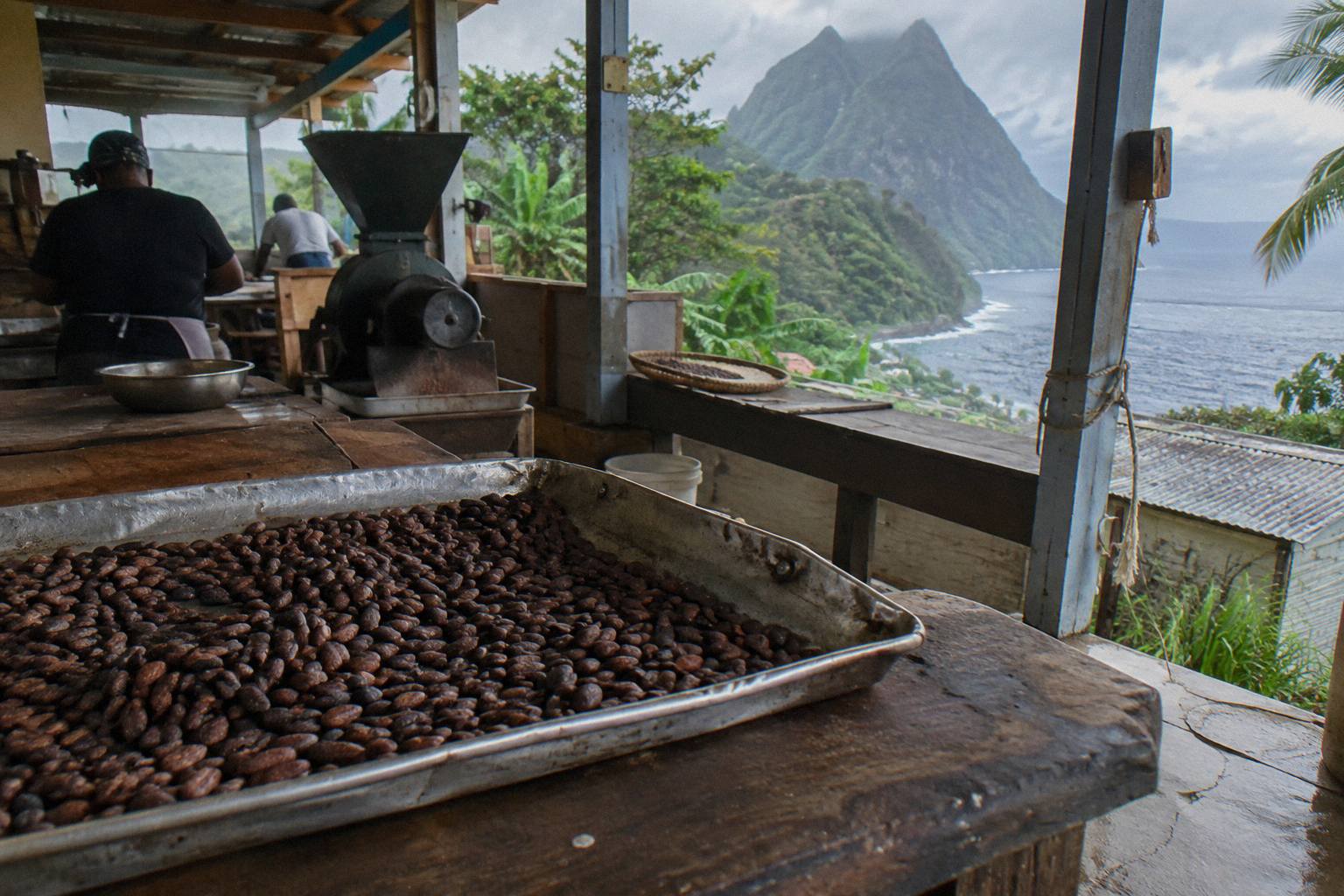
Five bookable chocolate experiences include a meal: the Project Chocolat "Tree To Bar Estate, Lunch Included" session pairs bar-making with a market-style lunch, the chocolate and coffee making tour includes lunch, the Soufriere chocolate and rum tour includes lunch, the Sea Spray excursion includes a local lunch, and the Island Routes catamaran day serves an a la carte lunch built around cocoa.
The table below carries only what each product's own description states. Where a product shows no meal flag, the row is left out rather than guessed at.
| Product | Decision name | Meal stated | Fare basis |
|---|---|---|---|
| Project Chocolat Tree to Bar Tour at Hotel Chocolat Saint Lucia | Tree To Bar Estate, Lunch Included | Lunch included, market-style per the Project Chocolat page | from US$130 per person |
| Hotel Chocolat Bean to Bar Experience in St. Lucia | Bean To Bar, Private Transport | Lunch named as excluded | from US$190 per person |
| St Lucia Chocolate and Coffee Making Tour Experience | Chocolate And Coffee Making, Lunch | Lunch included | from US$209 per person |
| St Lucia Chocolate and Rum Tasting Tour with Lunch in Soufriere | Chocolate And Rum, Lunch Included | Lunch included | from US$275 per person |
| St. Lucia Rum Tour and Chocolate Making Experience | Rum Tour And Chocolate Making, Pickup | Lunch named as excluded | from US$140 per person |
| Soufriere Excursion with Rum & Chocolate Tasting | Rum And Chocolate Day, Meal Included | Local lunch included, with rum punch and beer | from US$195 per person |
| St. Lucia: Hotel Chocolat, Catamaran Cruise, Sulphur Springs | Catamaran Cruise, Sulphur Springs | A la carte lunch, every menu item incorporates cocoa | from US$286.50 per person |
Read that table as a dietary instrument, not a ranking. A vegan traveller who wants the shortest exposure to unanswerable food questions is drawn to the Bean to Bar session, precisely because it names lunch as excluded: you make the bar, you eat on your own terms elsewhere in Soufriere, and the only ingredient conversation is about the bar itself. A traveller with a dairy allergy who wants a full day may prefer the catamaran product, because an a la carte menu is chosen dish by dish at service, which is an easier conversation than a pre-set group plate.
The cocoa-in-every-dish detail on the catamaran lunch deserves a flag of its own. A menu built around cocoa can mean cocoa in savoury sauces, rubs and dressings, which is a delight for a chocolate devotee and a hazard for someone with a specific sensitivity, including a caffeine or theobromine restriction. Ask what the cocoa-free options are when you ask about dairy and nuts.
Prices vary by date and group, and the booking page for each product shows the price for the date you have in mind. The figures above are the from-prices each product states.
The featured pick for this guide is the Tree to Bar estate session with lunch included, rated 4.7 from 587 reviews. It suits the dietary question because its structure is explicit: roughly 2.5 hours covering the cacao groves, the grafting demonstration and the bar you make, followed by a market-style lunch, all on six acres of the Rabot Estate, which the island's tourism body recognises as the oldest working cacao farm on Saint Lucia. A market-style lunch is typically a spread of dishes rather than one fixed plate, which gives a vegan or an allergy guest more to work with than a plated set menu would, though the dishes themselves need confirming with the operator. If the spread does not fit, the session's free cancellation up to 24 hours before start gives you room to ask first and decide after.
What Should You Ask The Operator Before Booking?
Ask one short, specific question in writing before you pay: does the bar-making use milk powder or butter, is the equipment shared with milk chocolate, and can the included meal be made without dairy, meat or your specific allergen. That single message, sent through the booking page's contact route before payment, answers more than any amount of reading, because the operator knows the room, the recipe and the kitchen.
No product description on the island's listed states any of it, so the operator's reply is the only reliable source. Wording matters. A vague question gets a vague yes. The phrasing that works is narrow and physical: "Is the chocolate made with milk powder, and are the grinders and moulds shared with milk chocolate batches?" followed by "Can the lunch be prepared without dairy and nuts, or can a plate be set aside?" Operators of small-group days, including the CHIC Hospitality vans that run one to three couples per vehicle, can often adapt a meal when they know a day ahead; a 30-guest excursion cannot, and that difference is worth weighing when you pick a format.
| Question to ask | Why it matters | When to ask |
|---|---|---|
| Does the bar recipe use milk powder or butter? | Separates dark bar-making from milk | Before booking |
| Are grinders and moulds shared with milk chocolate? | Trace exposure for a dairy allergy | Before booking |
| Can the included lunch omit dairy, meat or nuts? | The meal flag in the table above | Before booking |
| Can a separate plate be arranged for the group? | Small groups adapt more easily than large ones | At booking |
| Is water or a safe drink included? | Several products include bottled water | At booking |
| What happens to the bar you make? | Take-home packaging and heat on the day | At booking |
Two products make the bottled-water point for you: the Bean to Bar private transport session and the rum tour with pickup both name bottled water as included, and the Soufriere sights tour carries water, soda and beer as complimentary drinks. Hydration in a 23 to 31 degree climate matters more than most packing lists admit, and a guest who cannot drink the provided options should say so when booking. The island's average temperature sits between 23 and 31 °C all year per the Saint Lucia tourism seasons and weather page, so a dietary need that reacts to heat, such as keeping a dairy-free bar from melting, is a real packing consideration.
The Bean to Bar session is worth a closer look for exactly this reason. It runs about two hours, it names lunch as excluded, it includes private air-conditioned transport, and it carries free cancellation up to 24 hours before start, which makes it the natural short-list pick for a visitor who wants the chocolate conversation kept small. Its from-price is US$190 per person. Check availability on the live price for your dates, since the figure moves with the calendar.
How Do Dairy, Nuts And Soya Enter A Chocolate Session?
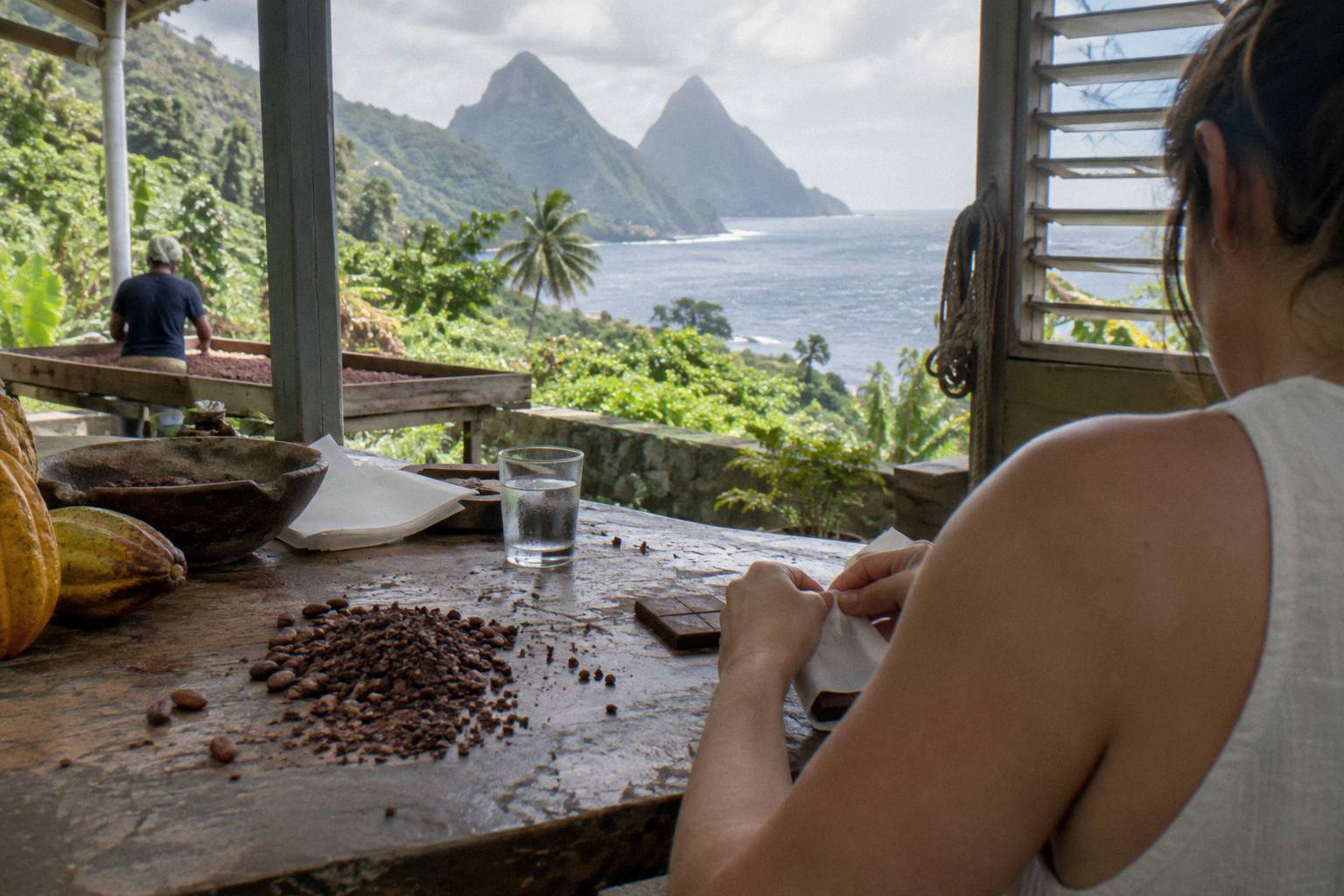
Dairy enters at the bar recipe, almost always as milk powder in milk chocolate and sometimes as butter in the tempering; nuts and soya enter through shared equipment, grinders and toppings laid out for the group; and cross-contact is the realistic risk rather than a hidden ingredient in the cocoa itself. Every teaching session shares one room, one set of moulds and one bench, so a severe allergy needs the equipment question answered.
The cocoa bean itself is not the problem. It is a seed, fermented and dried in the sun, and the island's finer chocolate is made from beans, sugar and nothing else in the dark ranges. The complication is that a teaching session is not a factory line. Beans roasted for a group go into grinders that may have run milk chocolate the day before, moulds are washed rather than sterilised between batches, and the toppings table at a family-run workshop can hold everything from local cocoa nibs to confectionery that carries milk solids. For a mild intolerance this is background noise. For an anaphylactic dairy or nut allergy it is the whole question, and it belongs in the pre-booking message, not in a hope.
Soya deserves a line of its own because it travels quietly. Lecithin, a common emulsifier in commercial chocolate, is often soy-derived, and guests avoiding soya for medical reasons should name it specifically when they ask about the bar recipe. Estate-made micro-batch chocolate frequently skips emulsifiers altogether, favouring beans and sugar, but frequently is not always, and the operator can tell you in one message what the label would tell you in a shop.
The meal side repeats the pattern. A local lunch in Soufriere can include fish, butter, cream or ground nuts in a sauce, and a rum pairing plate can carry toffee or praline made on the same bench as the tasting squares. None of this is stated in any product description, so it is not printed as fact here either; it is the reasoning behind the one-clause advice that runs through this guide, ask the operator before booking, and it is why the meal-flag table above is the first thing to consult rather than the last.
What Does Cocoa Tea Mean For A Plant-Based Visitor?
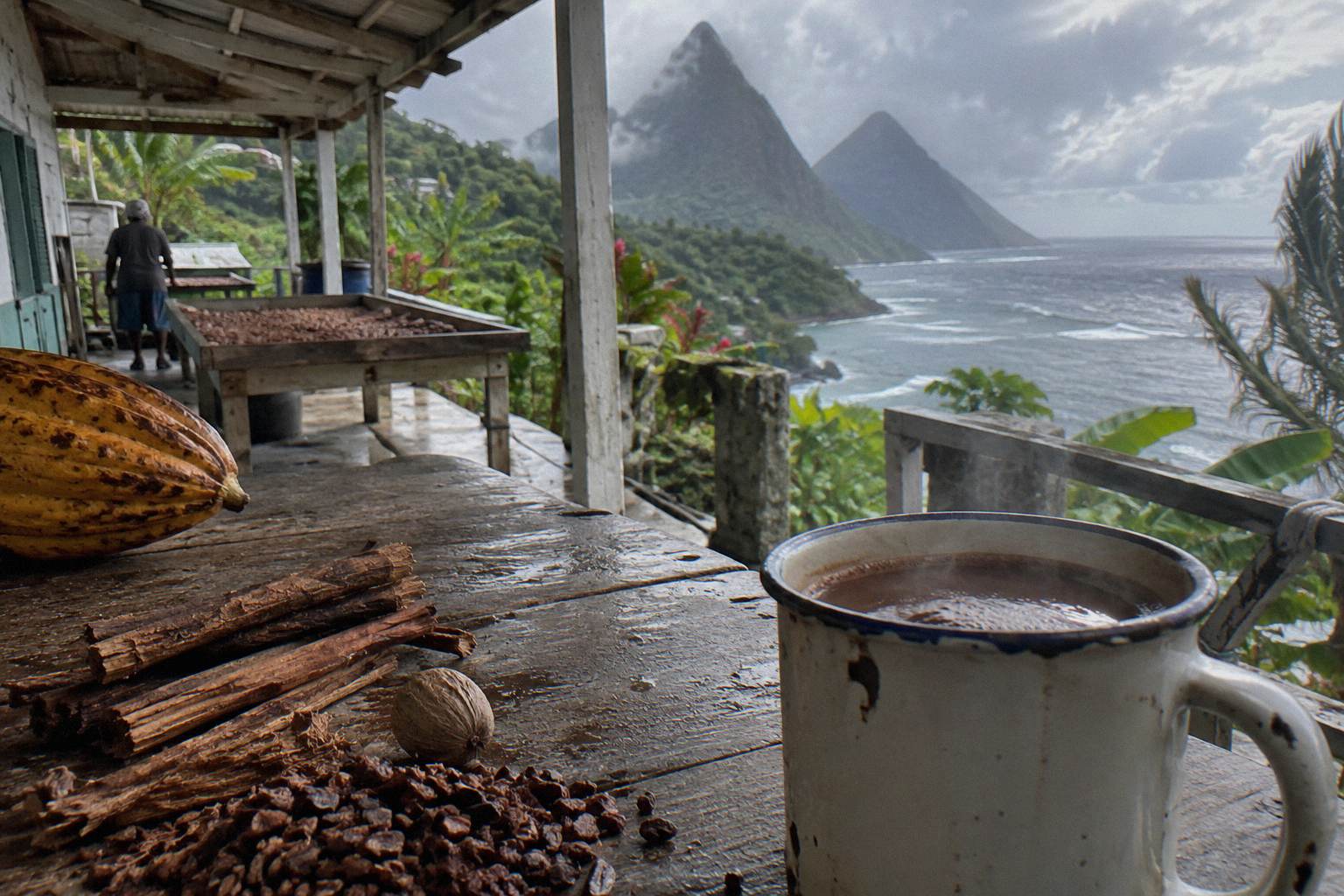
Cocoa tea is the island's own plant-based cocoa tradition, made from freshly ground cocoa sticks and spices such as nutmeg, cinnamon and bay leaf, and it is the one chocolate experience whose ingredients sit closest to vegan by default, though any milk added at serving needs asking about. The FAO story on the island's cocoa revival profiles a farmer who starts each morning with a cup, which tells you how ordinary and how deeply local the drink is.
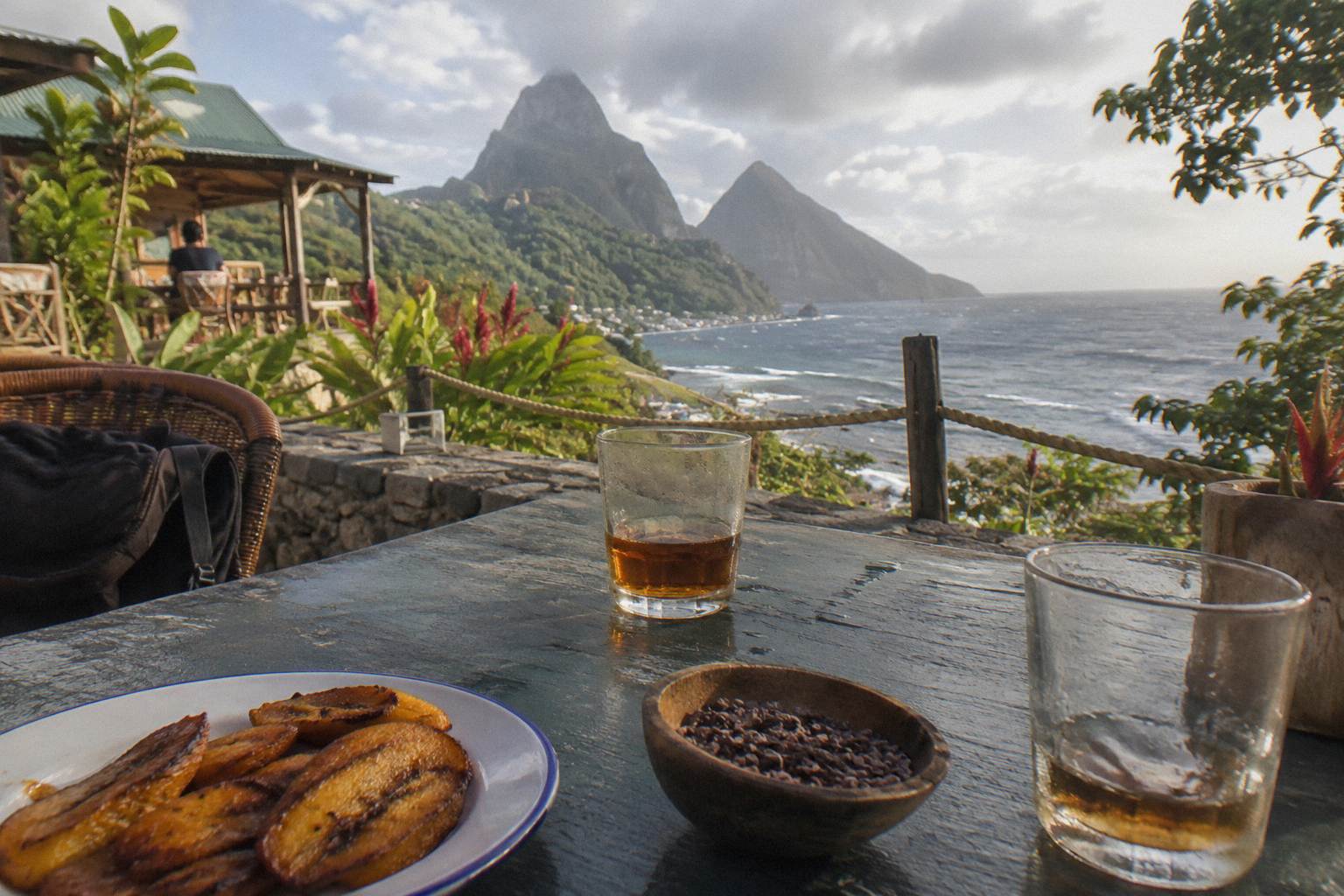
This matters for planning because it gives a dietary-restricted visitor something genuinely St Lucian to seek out that does not depend on a workshop recipe. The drink is built from ground cocoa and spices, in the FAO's description, and it is served across the island in homes, markets and estate cafés. Whether a given cup is made with water or with milk is a per-kitchen question, so the same one-line habit applies: ask what is in the cup. A guide worth pairing with this one is what cocoa tea is and where to try it, which covers the tradition in detail.
The Project Chocolat site gives the visitor a place to have that conversation without booking anything. It opens daily from 08:00 to 17:00, walk-ins are welcome for food and drink, and a shop sells handmade micro-batch chocolate, so a guest with an allergy can read labels and ask staff face to face before committing to a session. That works well as a low-stakes first stop: walk in, ask about the chocolate in the shop, and decide from there whether the making session fits.
The deeper background is worth knowing too, because it explains why the island's cocoa culture is bean-first. Cocoa arrived in the 1660s, played second fiddle to bananas through the industry's 1960s peak, and came back after the banana trade's early-2000s collapse, per the FAO account. Saint Lucia now sits among the top nine exporters of 100 percent fine or flavour cocoa by the International Cocoa Organization's measure as quoted by FAO. A revival built on fine-flavour beans is a revival built on dark chocolate, which is the end of the shelf a plant-based visitor wants to be standing at.
How Do You Choose A Session When Diet Drives The Decision?
Choose by format first, meal flag second: a short two-hour bar session with no meal keeps the ingredient conversation to one room, a small-group day with an included lunch spreads it across two, and a large-format excursion takes the meal as it comes. Group size is the hidden variable, because a van of one to three couples can adapt a plate and a 30-guest outing cannot, and the lineup states the small-group formats directly.
The comparison below uses only the formats and flags the products themselves state.
| Product | Format as stated | Duration | Meal flag |
|---|---|---|---|
| Bean To Bar, Private Transport | Private transport included | 2 hours | Lunch excluded |
| Tree To Bar Estate, Lunch Included | Session on six acres at Rabot | 2 to 3 hours | Lunch included |
| Rum And Chocolate Tasting, Transport | Up to 10 guests | 4 to 5 hours | No meal named |
| Chocolate Making, Marigot Bay Shopping | Small group, up to 6 guests | 5 hours | Food and souvenirs purchasable |
| Chocolate, Rum And Rafting Trio | Small group, up to 6 guests | 6 hours | Snacking en route recommended |
| Coffee Crop To Cup, 6-Hour Combo | Up to 30 guests | 6 hours | Snacks, coffee and tea included |
| Rum And Chocolate Day, Meal Included | Up to 10 guests | 8 hours 30 minutes | Local lunch included |
The pattern is plain once drawn out: the longer the day, the more likely a meal is named, and the more likely the meal is a fixed group spread. A vegan visitor planning around the Coffee Crop To Cup combo should note two things from its own line: snacks, coffee and tea are included while meals and alcoholic drinks are excluded, and it runs up to 30 guests with a minimum age of 13. That is a bring-your-own-lunch day with the biggest group, which for a strict allergy may be the wrong shape entirely; for a flexible vegetarian it may be perfect.
It is a small group of up to six, it includes all fees, and its own description recommends snacking en route at chocolate shacks and banana bread stands, which is the island's roadside food culture rather than a catered plate. Rated 4.8 from 55 reviews, from US$149.50 per person, it splits the dietary question into many small roadside decisions instead of one big set menu, which suits some restrictions and defeats others.
For the full cost picture across every format, the guide to what chocolate experiences cost in St Lucia carries the prices in one place, and what to wear and bring to a cocoa estate session covers the practical side of a hot working day. Neither replaces the operator message; both narrow the choice before you send it.
Are Small Groups Better For Allergies Than Large Tours?
Usually yes, and the lineup says so in its own format lines: the products running one to three couples per van, or up to four or six guests, can hold a modified plate, answer a question mid-tour and reroute a tasting, while a 30-guest outing moves on a fixed schedule with fixed food. For a severe allergy the small group is not a comfort preference, it is the margin that makes the day workable.
The private options make the point at the top of the price ladder. The Private Cocoa Plantation Visit runs up to 4 guests from US$120, water included, entrance fees paid separately; the Private Workshop, Beach And Rum product from Fabian Tours includes private transport, a driver-guide, the bean-to-bar fee, rum tasting, water and refreshments, with no price on file. A private day is the format where "can the kitchen do a dairy-free plate" is answered by a driver who simply radios ahead, and where the chocolate session's toppings table can be cleared for one guest without anyone waiting.
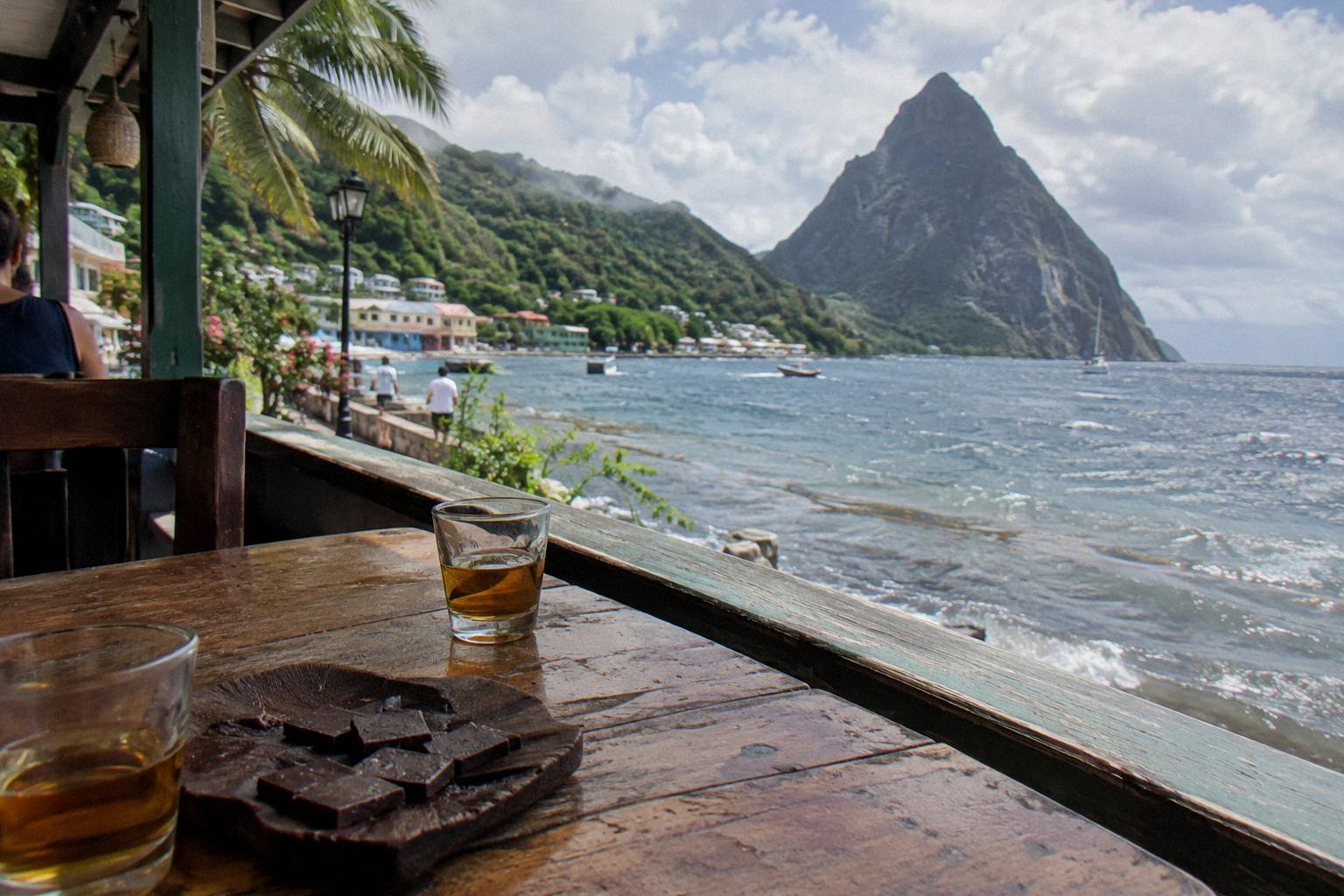
Families with young children face a parallel version of the same choice, and the age minimums matter as much as the group size. The Marigot Bay shopping and chocolate tour accepts guests from age 2 in a van of up to six, the rum and chocolate tasting tour from age 7, the Tree to Bar session at Project Chocolat from age 8, and both six-hour rum-inclusive days from age 12 or 13 with the rum tour at 21. A parent managing a child's allergy alongside a chocolate bench full of shared toppings will want both the small group and the age fit, and how kids fare at a cocoa estate works through that triangle in detail.
One caution belongs here rather than later: private does not mean allergen-free. A private session still uses the same estate kitchen, the same grinders and the same chocolate recipes as the group sessions, so the pre-booking questions in the table above do not disappear when the van does. What changes is who answers them and how much slack the day has to adapt once the answer arrives.
What Trips People Up Before You Book
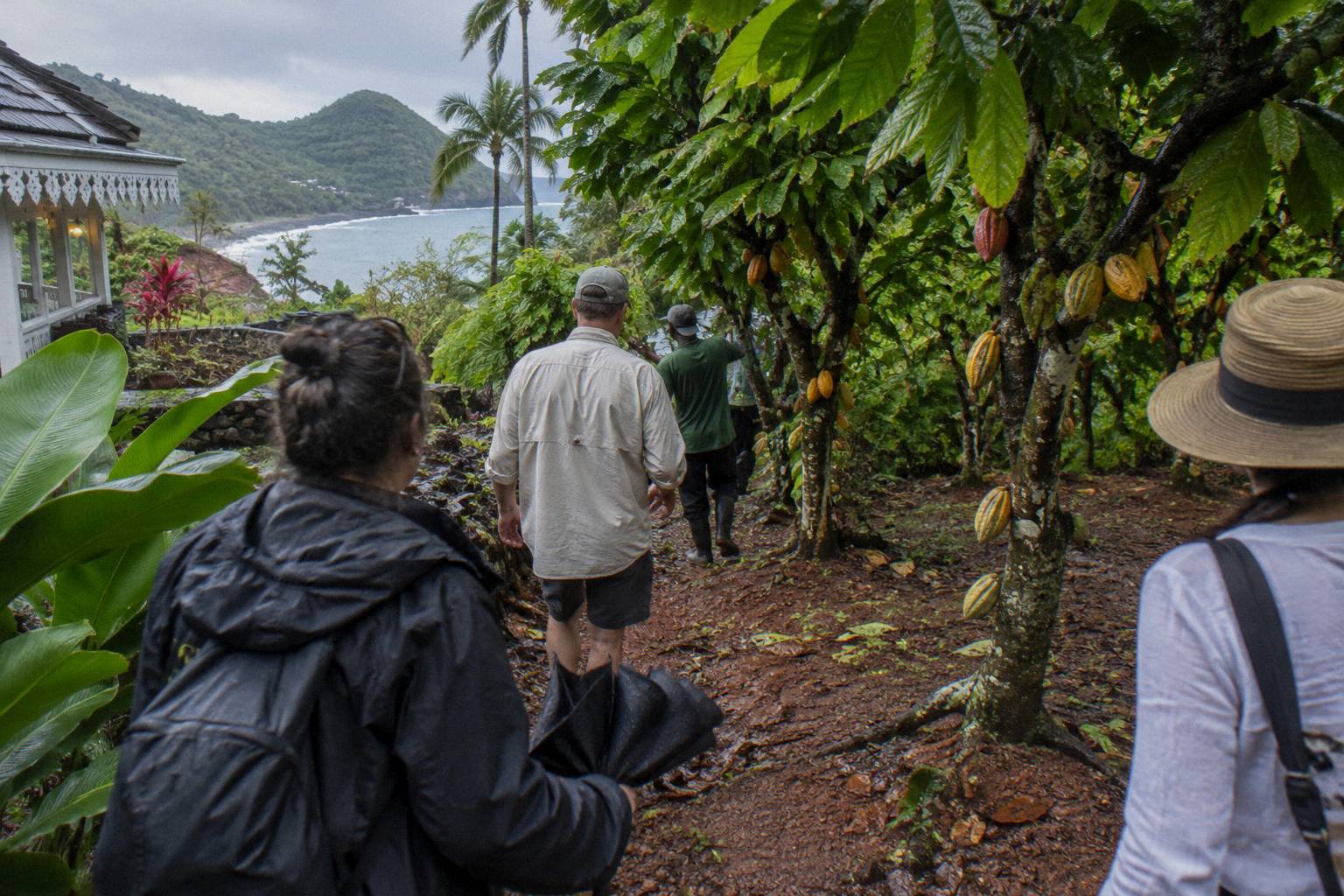
Most people get caught by assuming a chocolate tour description includes food, when many do not, and by reading "dark chocolate" as dairy-free when shared grinders and milk powder in nearby batches can carry traces into a plain bar. Ask one written question before payment: confirm whether a vegan meal is included and whether cross-contamination is possible.
The third trap is the extras line. The Rum Tour And Chocolate Making product names a chocolate factory admission of US$45 per person that is not in the fare and is paid separately, and the Sugar Beach day names a mud bath entrance of US$12 per person paid separately; a budget built only on the from-price will be wrong on the day. The fourth is cancellation: most products here cancel free up to 24 hours before start, but the catamaran day is all sales final, which removes the ask-first-then-decide luxury that every other product on this page enjoys. A dietary conversation held after payment on that product is a conversation held without any fallback.
The fifth trap is the tasting plate at rum pairings. Rum itself is plant-derived, but the accompaniments often are not, and a pairing built around toffee, praline or cream liqueur can quietly defeat a dairy-free plan. The rum and chocolate tasting guide covers what these days pour and serve. The sixth trap is heat: a handmade bar carried through a 28-degree afternoon becomes a handmade puddle, so plan packaging and a cool bag the way you plan the questions.
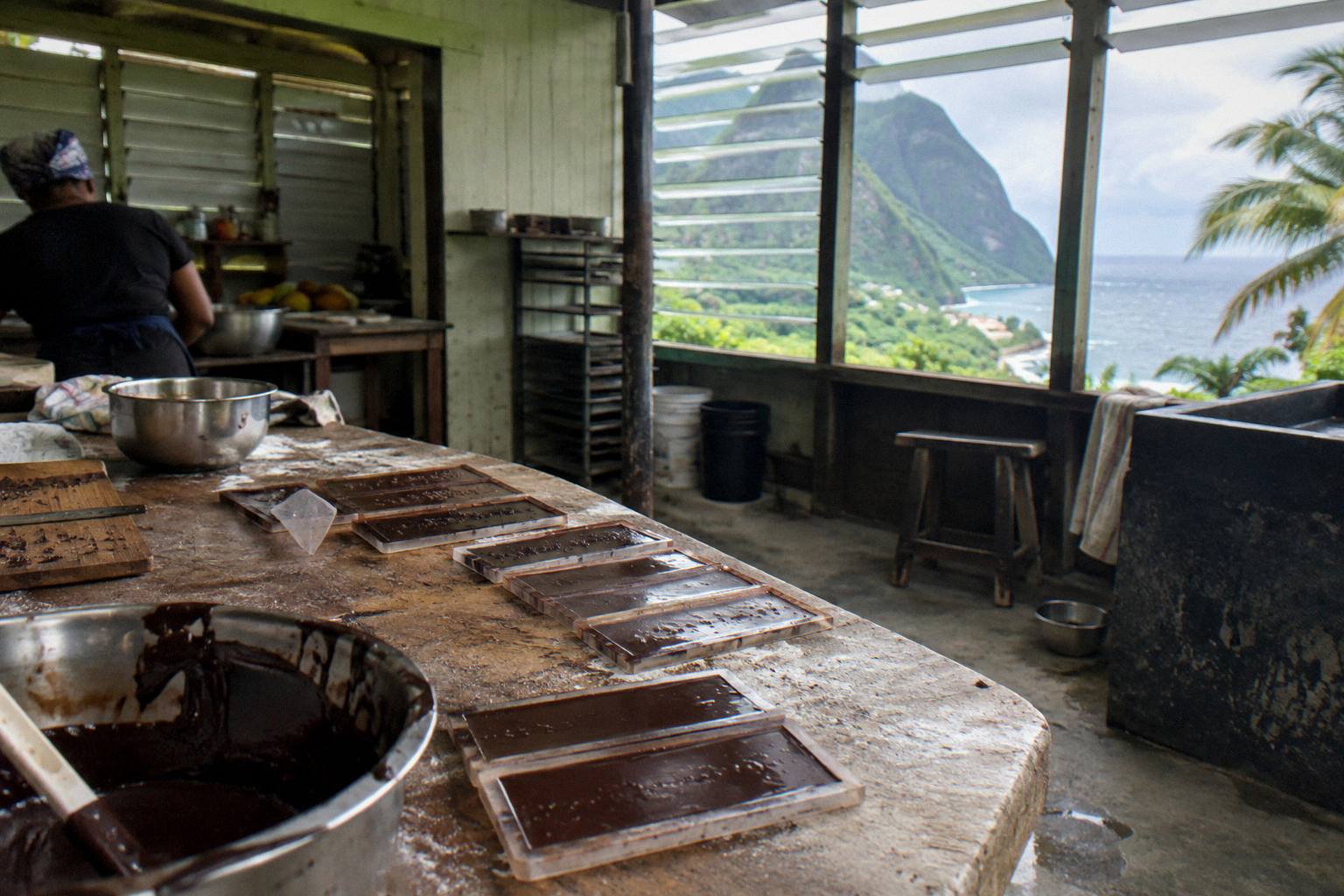
Bringing it together, a dietary-restricted visitor to St Lucia Chocolate Tours' subject island has a workable path: filter by meal flag, prefer the small group, ask the one written question, and lean on the free-cancellation products while the answer is pending. The island's cocoa tradition, from a 1660s arrival to a fine-flavour revival that the Saint Lucia tourism local farms page documents estate by estate, is generous enough that the diet decides the format, not whether the day happens.
Common Questions About Dietary Needs At Estate Sessions
Can You Do Vegan Chocolate Making In St Lucia?
No bookable session states a vegan option, but the structure can work: plain cocoa is plant-based by origin, so choose a session with no meal or a confirmed adaptable one, and ask the operator in writing about milk powder, butter and shared equipment before booking.
Is The Chocolate Made On These Tours Dairy-Free?
Not necessarily. Dark ranges made from beans and sugar exist on the island, but teaching sessions share grinders and moulds with milk chocolate batches, and some recipes use milk powder. Ask the equipment question before booking if traces matter.
Which Chocolate Tours Include Lunch?
Five products name a meal: Tree To Bar with a market-style lunch, Chocolate And Coffee Making, Chocolate And Rum in Soufriere, the Rum And Chocolate day with a local lunch, and the catamaran day with an a la carte lunch where every item incorporates cocoa.
Is Cocoa Tea Vegan?
The drink is made from freshly ground cocoa sticks and spices such as nutmeg, cinnamon and bay leaf, per the FAO story on the island's cocoa. Whether a given cup is made with water or milk varies by kitchen, so ask what is in the cup.
Can An Operator Adapt A Meal For An Allergy?
Small-group days adapt more easily than large ones: products running one to three couples per van can often modify a plate when told ahead. Ask before booking, since no product description states a dietary adaptation.
What If My Dietary Question Is Answered After I Book?
Most products on this page cancel free up to 24 hours before start, so you can book, ask, and cancel if the answer does not fit. The catamaran day is the exception: all sales are final, so hold that conversation before payment.