Cacao Harvest And Best Months For An Estate Visit
Harvest timing decides what a grove walk looks like, but no official St Lucia source publishes cocoa crop months. What the records do show is rain, heat, cruise ships and cancellation windows, and those are what should set your booking calendar.
Short answer
No official source publishes St Lucia cocoa harvest months, so pick your month on weather instead. December to April is the driest, busiest stretch; June to December brings brief showers; hurricane season runs June 1 to November 30. Estate chocolate sessions run year round on the booking calendar, most with free cancellation up to 24 hours before.
If a chocolate session is the anchor of your day in Soufriere, start with the Tree To Bar estate session, lunch included and work backwards to the calendar. Season shapes a cocoa estate visit twice over: once through what the weather does to your day, and once through how many other visitors arrive on the same morning. The sessions themselves run on the booking calendar throughout the year, so the real decision is which month gives you the day you want.
| Fact | Detail |
|---|---|
| Average temperature | 23 to 31 °C all year |
| Driest, busiest season | December to April |
| Rainy season | June to December, with brief showers |
| Hurricane season | June 1 to November 30 |
| Main Castries cruise season | October to April, up to five ships in a day |
| Harvest months | No official source publishes cocoa crop months |
| Session cancellation | Free cancellation up to 24 hours before start on the sessions that state it |
What Season Actually Decides On A Cocoa Day
Season decides three things on a cocoa estate day: whether you get the dry, bright walk through the groves or a wet one, how many cruise passengers are sharing the Soufriere sites, and how easy it is to reschedule if a storm system rolls through. It does not decide whether chocolate gets made, because the sessions run on the booking calendar in every month. Rain is a planning note, not a reason to cancel the idea.
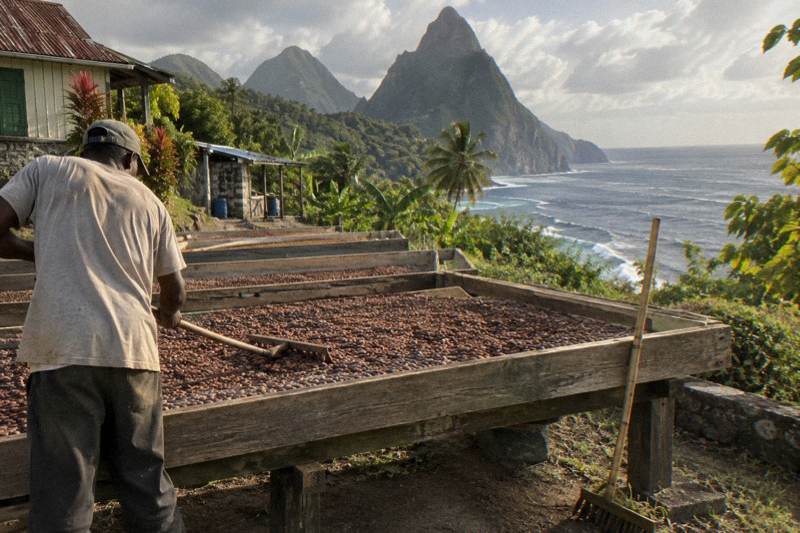
The part of the calendar nobody can hand you is the harvest itself. Cocoa arrives on St Lucia in the 1660s, per the FAO story on cocoa on Saint Lucia, and the crop has been part of island life ever since, but no official or primary source publishes which months the main crop comes in. Any page promising ripe pods in a specific month is guessing, and a grove in the quiet part of the cycle still shows trees, grafting, fermentation and drying, which is where most of the learning happens anyway. Ask the operator what the groves look like in your month if pod colour matters to you.
What the records do publish is weather, and it is remarkably even. Temperatures sit in a narrow band all year, so a February estate morning and an August one differ far less than visitors expect. The variables that actually move your day are rainfall volume, which months the cruise season fills, and whether your chosen session carries a 24 hour cancellation window. Those are all printable, all sourced, and they do the job harvest guesswork cannot.
It helps to separate the two questions people usually mash together. "When is the harvest?" has no sourced answer on this island, and no amount of forum reading will produce one that an estate would stand behind. "When should I go?" has a clear, data-backed answer built from rainfall averages, cruise schedules and cancellation terms, and that is the question this guide answers month by month. Treat the first as a conversation to have with your operator once booked, and the second as the decision you make before you book anything at all.
Month By Month Rainfall And Temperature
Rainfall is the one number that swings hard across the St Lucia year, roughly doubling from the driest month to the wettest, while temperature barely moves. March averages about 65 mm of rain and October about 250 mm, yet the mean temperature difference between those months is under two degrees. In practical terms, the month you pick changes how likely you are to get wet, not how hot you will be.
The monthly figures below come from climatestotravel.com's Saint Lucia climate data, which tracks mean air temperature in degrees Celsius and rainfall in millimetres. Treat them as averages, not forecasts: the tourism authority describes the rainy season as bringing brief showers rather than all-day rain, so a wet-season day often still has long dry stretches in between.
| Month | Mean temp (C) | Rainfall (mm) |
|---|---|---|
| January | 26 | 105 |
| February | 26 | 70 |
| March | 26.5 | 65 |
| April | 27.4 | 85 |
| May | 28.1 | 105 |
| June | 28 | 155 |
| July | 28 | 200 |
| August | 28.1 | 220 |
| September | 28.2 | 205 |
| October | 27.8 | 250 |
| November | 27.4 | 235 |
| December | 26.6 | 130 |
Read the table as a gradient rather than a switch. February and March form the floor, April and May climb gently, and June onwards steps up through 155, 200 and 220 mm into the September to November peak. December drops back sharply toward the January level, which is why the December to April window earns its reputation. For a fuller picture of the plant side of the calendar, see how cocoa moves from plantation crop to bar.
One nuance the raw numbers hide: a millimetre total says nothing about when in the day the rain falls. Tropical showers cluster in short, heavy bursts, often afternoon ones, which is why a morning session slot in a wet month can play out almost exactly like a dry-month morning. The rainfall column is therefore best read as a probability dial rather than a forecast of misery, and it should be weighed against the crowd column of the cruise calendar, which points the opposite way at the same time of year.
December To April: The Driest, Busiest Stretch
December to April is the island's driest season and its busiest, and the two facts are one decision. You trade the lowest rainfall numbers on the chart, with March near 65 mm, for the highest visitor density of the year, because this is when the cruise season is at full tilt and the resort coast fills. Book sessions ahead in this window; the calendar, not the weather, is what runs out.
The Saint Lucia tourism seasons and weather page frames it plainly: December to April is both the busiest time and the driest. For an estate day, that combination means reliable walking conditions in the groves and the largest crowds at anything with a view. Soufriere's sites, including the Pitons, inscribed by UNESCO in 2004, draw day visitors from all over the island in this stretch, and the Soufriere day trip with a chocolate stop is a different experience in March than in September for exactly that reason.
The trade works differently depending on format. A private session, like the Private Cocoa Plantation Visit from US$120 with entrance fees paid separately, insulates you from crowds by design, since the lineup caps it at four guests. Check the live price for your dates, since amounts vary by date and group.
The flagship estate session in this window is the Tree To Bar Estate, Lunch Included day, from US$130 per person, rated 4.7 from 587 reviews, running two to three hours at Project Chocolat on six acres of the Rabot Estate, which Hotel Chocolat bought in 2006 and describes as the oldest working cacao farm on the island. Transportation is excluded on that product, so a dry-season morning also simplifies the drive down the coast, whatever its length. Its full session breakdown covers what the stages involve.
June To December: The Rainy Season In Practice
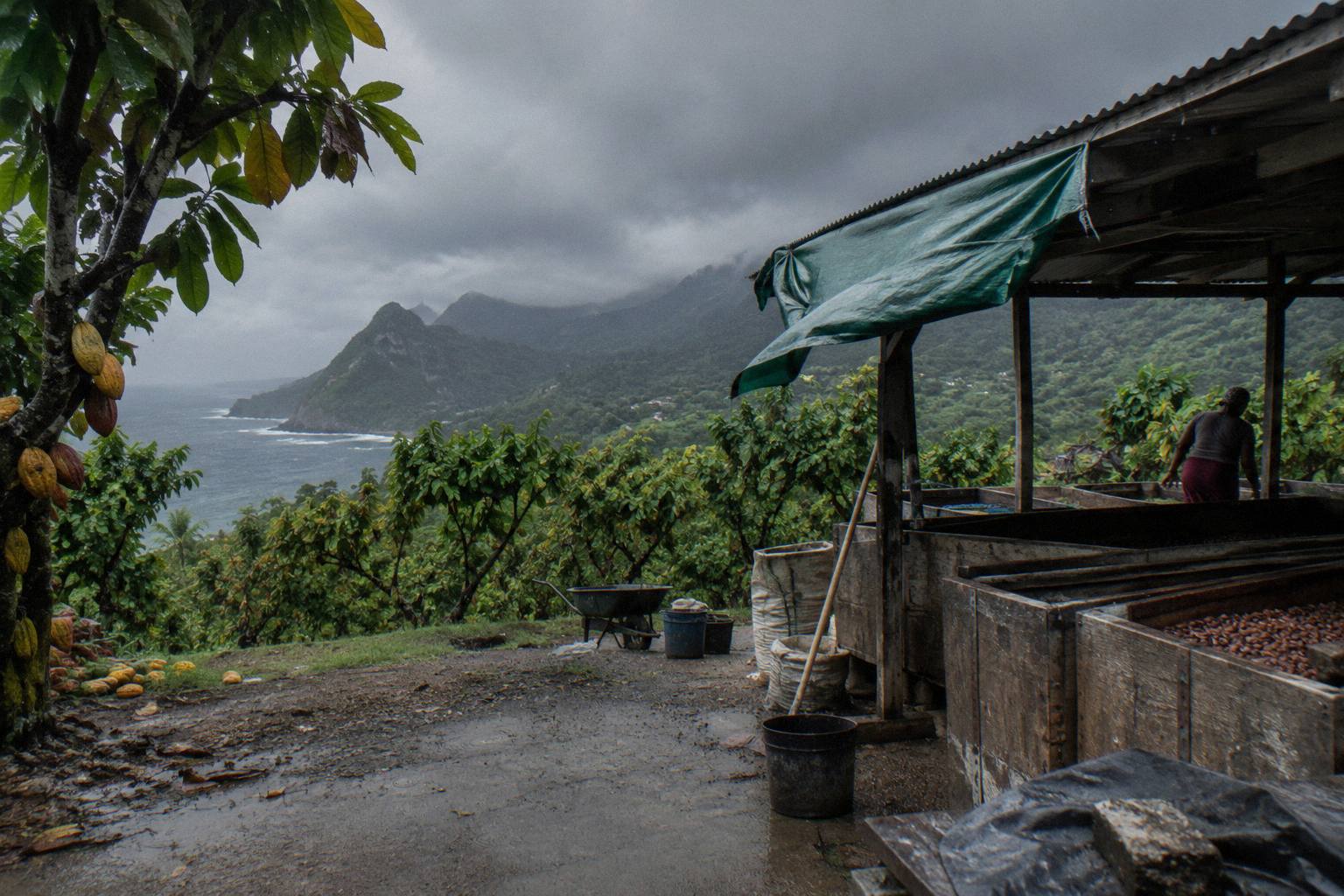
The rainy season, June to December, roughly doubles monthly rainfall against the spring floor, but it arrives as brief showers rather than settled grey days, per the tourism authority's own description. Mean temperatures stay around 28 °C through these months, the highest of the year. An estate session is entirely workable here; it just needs the 24 hour cancellation window most sessions carry.
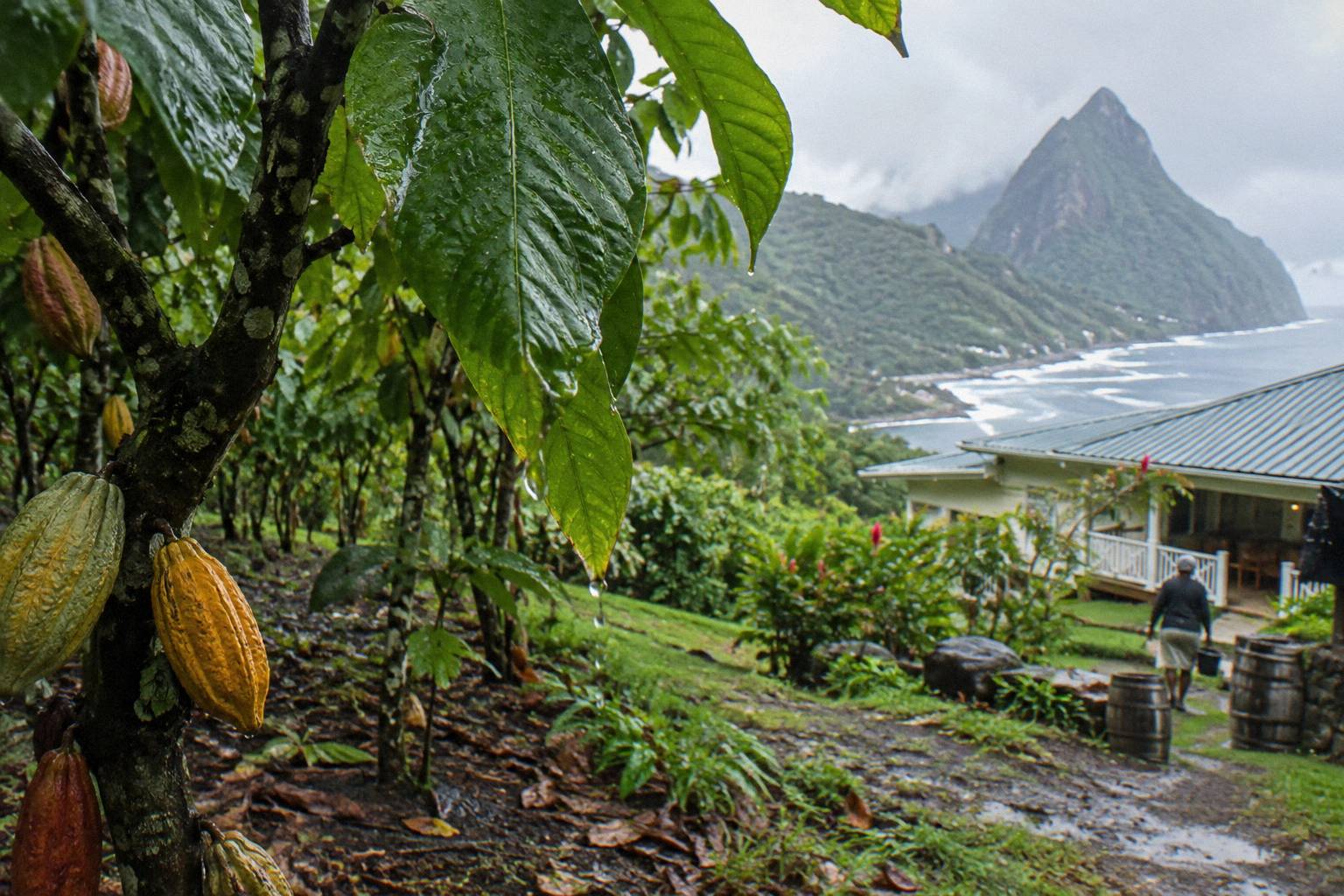
A brief shower on a cocoa estate is a different event from the same shower on a beach day. The grove walk has canopy cover, the chocolate-making stage happens under a roof, and the fermentation and drying stops are working parts of the estate rather than scenic overlooks. The cocoa estate day from Rodney Bay and the north page covers how a wet-weather morning changes the sequence. What rain genuinely threatens is the combined format, the days that pair chocolate with rafting or boating, because a river or a coast adds weather exposure the estate itself does not have.
In the wet months, that cancellation window is the feature worth reading closely; in the dry months it barely matters. See dates for your month before committing to a multi-part day.
One reassurance specific to this island: the tourism authority runs a Holiday Guarantee under which a hurricane leads to cancellation or reschedule before arrival at no cost, which sits alongside the individual session policies. That is an island-level commitment, not a substitute for checking what your specific session says, but it means a storm system does not have to mean a lost booking. Combine it with the 24 hour windows and a June booking carries far less lock-in than the word "hurricane" suggests, provided you read the terms before you pay rather than after.
Hurricane Season And What It Means For Bookings
Hurricane season runs June 1 to November 30, overlapping the rainy season almost exactly. For an estate visit, the practical consequence is procedural rather than dramatic: hold sessions that state free cancellation up to 24 hours before start, and know which products do not carry it. One listed day, the catamaran and estate combo, is all sales final, which makes it the one product where the storm window changes the arithmetic.
The dates themselves come from the US National Hurricane Center climatology page, the authority on Atlantic basin season boundaries. The distinction matters most for the big combined days. The Catamaran Cruise, Sulphur Springs day from US$286.50 per person, rated 4.2 from 19 reviews, is a 10 hour itinerary with no free cancellation, all sales final. In June or October, that is a materially different booking than the same product in February, purely because the reschedule option is absent. By contrast, the Rum And Chocolate Day, Meal Included from US$195 per person, 8 hours 30 minutes with lunch and drinks included, carries free cancellation up to 24 hours before start, which converts a storm forecast from a financial risk into a scheduling choice.
| Session | From price | Cancellation |
|---|---|---|
| Tree To Bar Estate, Lunch Included | US$130 per person | Free up to 24 hours before |
| Chocolate And Coffee Making, Lunch | US$209 per person | Free up to 24 hours before |
| Rum Tour And Chocolate Making, Pickup | US$140 per person | Free up to 24 hours before |
| Rum And Chocolate Tasting, Transport | US$175 per person | Free up to 24 hours before |
| Chocolate, Rum And Rafting Trio | US$149.50 per person | Free up to 24 hours before |
| Sugar Beach, Chocolates And Mud Baths | US$187.50 per person | Free up to 24 hours before |
| Catamaran Cruise, Sulphur Springs | US$286.50 per person | All sales final |
Amounts are US dollars, and prices vary by date and group; the booking page shows the price for the date you choose. The seasonal read on that table is simple: in the June to November window, prefer rows with a cancellation column you can live with, and treat the all-sales-final row as a dry-season product unless a stable forecast says otherwise. Booking ahead is covered in more depth in booking ahead or on the day for estate sessions.
Cruise Season And Crowds At The Soufriere Estates
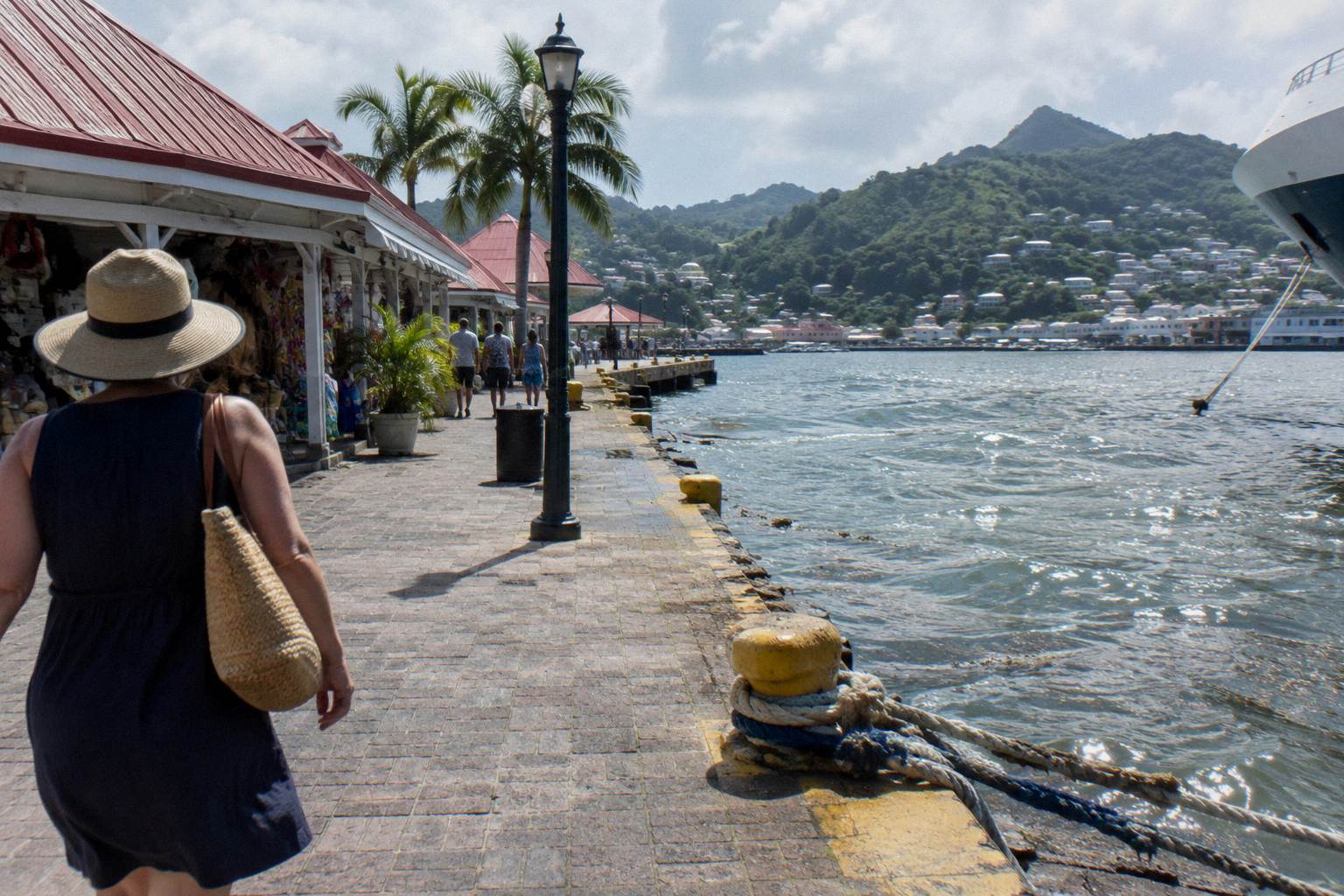
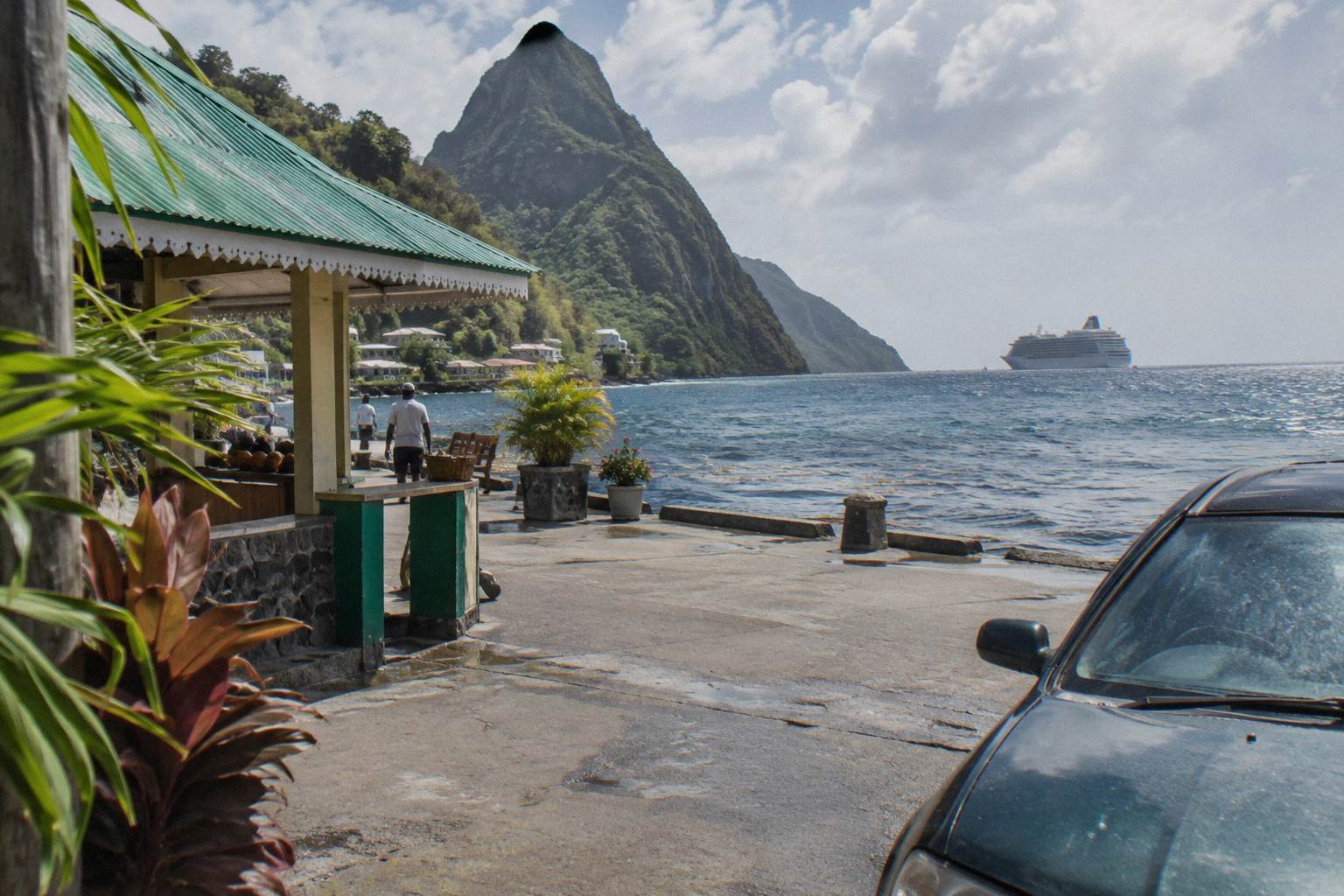
Castries' main cruise season runs October to April, with as many as five ships calling in a single day, per the ports authority. That window overlaps the dry season, which stacks the two crowd drivers on top of each other. Estate sessions with small caps or private formats absorb cruise traffic well; anything shared and mobile feels busier, especially midweek port days.
The Saint Lucia ports authority cruise page gives the operational detail: Pointe Seraphine is the cruise-dedicated berth within walking distance of Castries, and La Place Carenage sits across the water with water taxis connecting them. Cruise passengers heading south for a chocolate day have their own logistics, covered in the cruise passenger chocolate day from Castries.
For stay-over visitors, the cruise calendar is a crowd forecast you can act on. A private format like the Private Chocolate, Mud Bath Option day from Fabian Tours, up to two guests with the mud bath fee included, sidesteps ship-day congestion entirely. The Rum And Chocolate Day, Meal Included runs up to 10 guests and departs Soufriere, so it starts where the crowds are; in the October to April window, ask the operator which weekdays carry the heaviest port schedule. A five-ship day does not cancel your session, it just means the viewpoints, the car parks and the lunch stops all run fuller, and a small-group or private format keeps the day feeling like yours.
Matching The Month To The Session Format
Match month to format on two axes: weather exposure and group size. Dry-season months favour any format, including boat, beach and rafting combinations, and they need early booking because of demand. Wet-season months favour roof-heavy formats, the estate sessions themselves, and products carrying the 24 hour cancellation window, and they reward private or small-group bookings over shared departures.
| Season window | Weather pattern | Formats that fit best |
|---|---|---|
| December to April | Driest, 65 to 130 mm monthly rain | All formats, including catamaran and rafting days; book ahead |
| May | Climbing rain, 105 mm, quiet shoulder | Small-group and estate-only days |
| June to August | 155 to 220 mm, brief showers | Estate sessions, distillery stops, 24 hour cancellation products |
| September to November | 205 to 250 mm, hurricane window | Roof-heavy sessions, private formats, refundable bookings |
| October to April overlap | Dry or shoulder plus cruise season | Private and small-group formats beat shared departures |
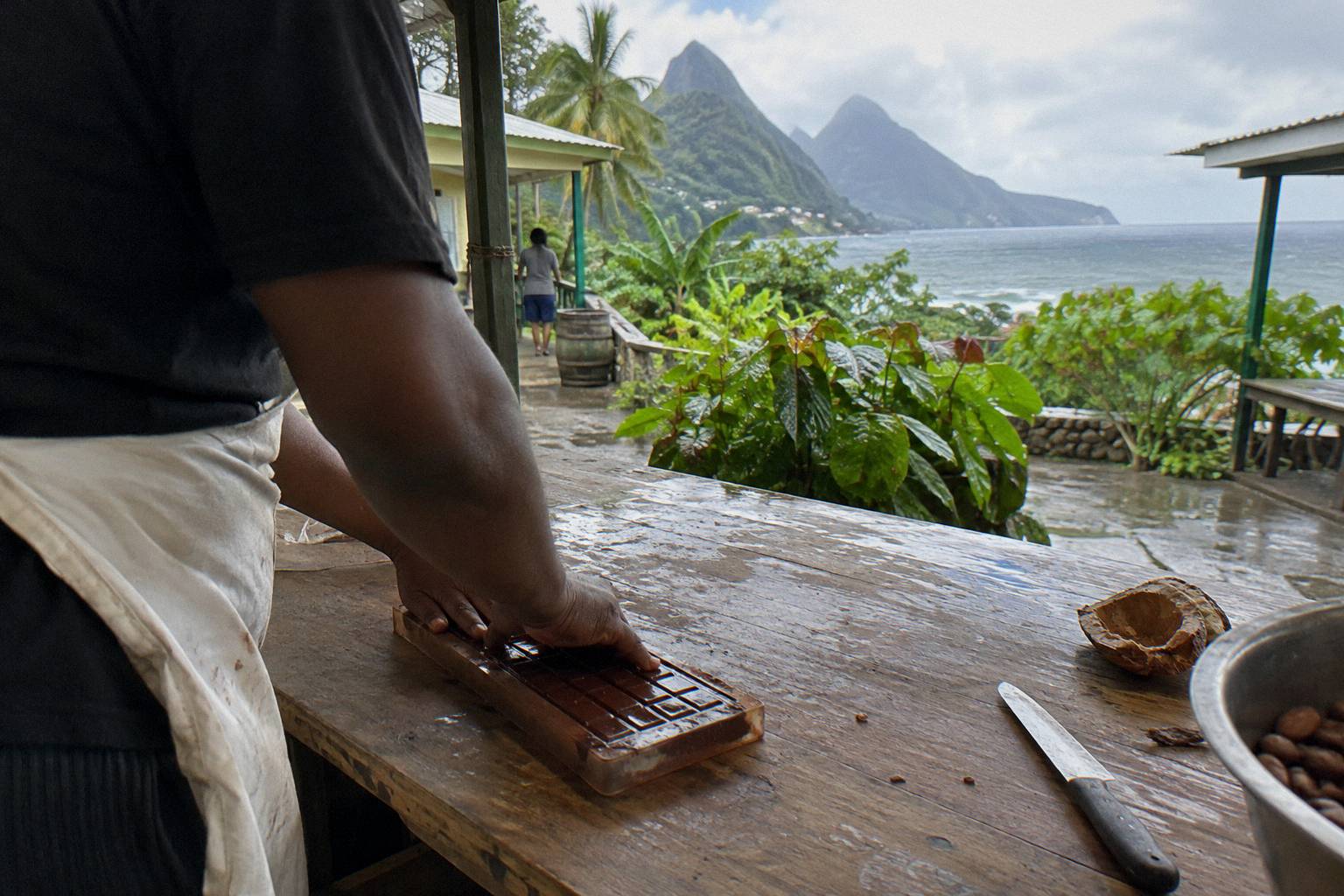
A few listed examples make the matrix concrete. The Bean To Bar, Private Transport session from US$190 per person includes private air-conditioned transport and drinks, two hours, open to all ages, which makes it a wet-month shape: door to vehicle to roof, with no outdoor stage exposed to the weather. The Coffee Crop To Cup, 6-Hour Combo from US$250 per person, minimum age 13, up to 30 guests, spans two crops and snacks but excludes meals, so it belongs to a day you already expect to be long, rain or not. The full format comparison lives in choosing between a tree to bar session and a chocolate making class.
Families should weight the age minimums into the month choice too. The kids at a cocoa estate guide works through the ages and pace question in full.
What The Cocoa Calendar Can And Cannot Tell You
The printable cocoa calendar is a story of eras, not months. Cocoa arrived in the 1660s, Morne Coubaril's estate history places its origins in the 1740s, the banana boom of the 1960s pushed cocoa aside, and the early 2000s banana collapse reversed the order, putting cocoa, in FAO's wording, on the up again. None of that tells you which week the pods ripen.
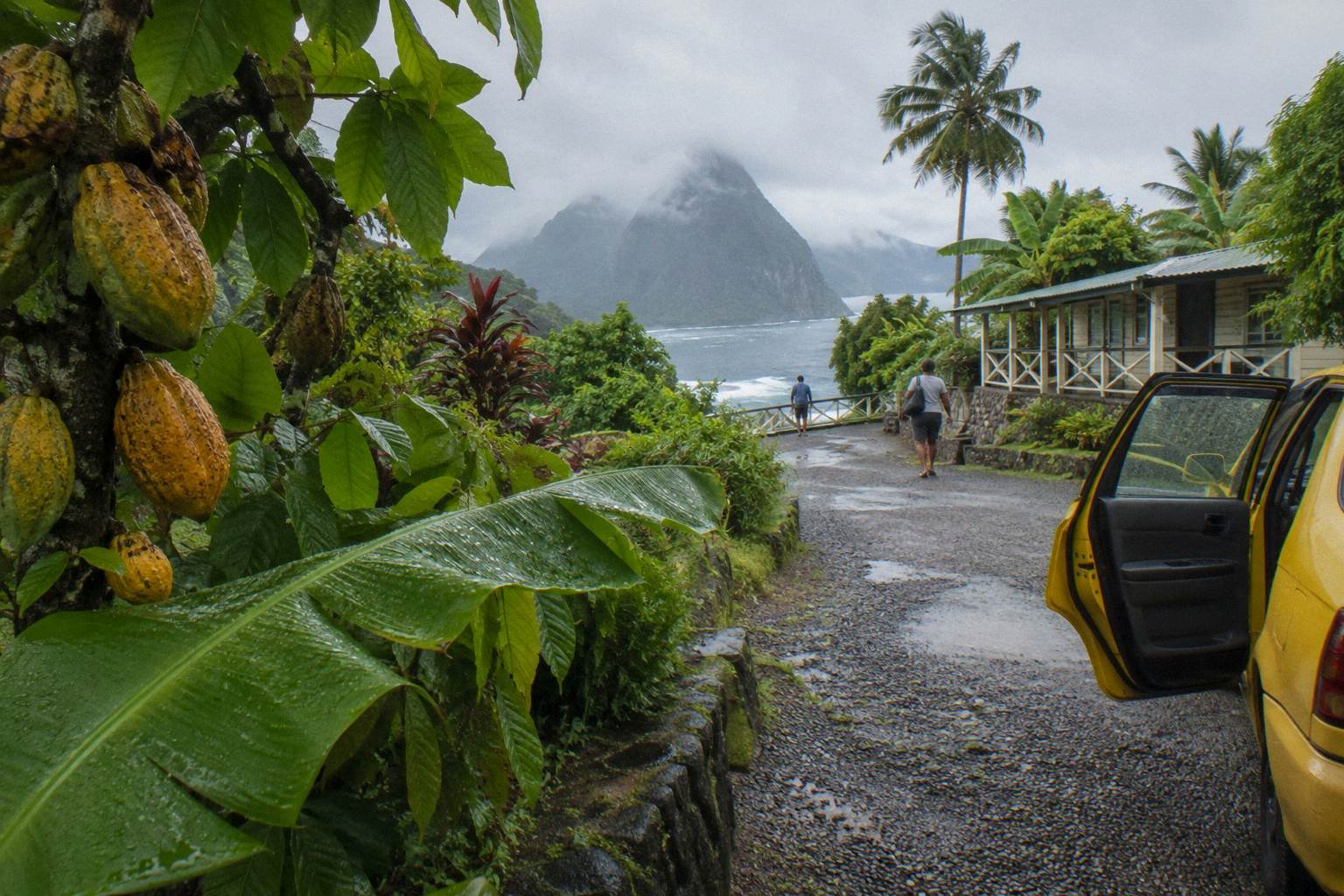
That revival is why the sessions exist at all. Saint Lucia sits among the top nine exporters of 100 percent fine or flavour cocoa and the top 23 producers of premium cocoa, per the International Cocoa Organization as quoted by FAO, and a hotel chain is the island's largest cocoa market. The estates you can visit, Rabot, Fond Doux, Morne Coubaril, Cacao Sainte Lucie, Howelton, are working pieces of that supply chain, not museum sets. What they cannot promise is a stage of the crop cycle on a given date, because no official source publishes it.
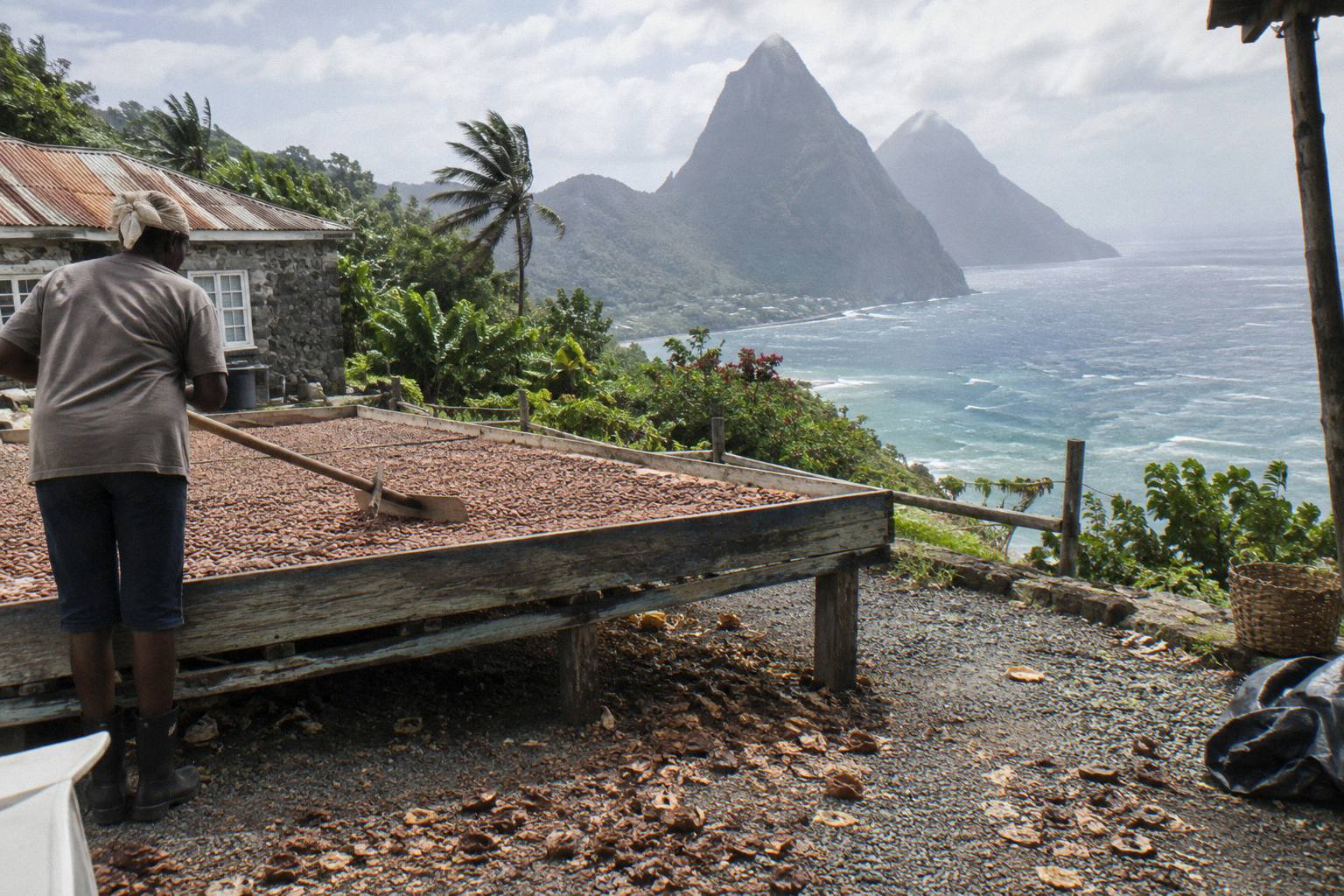
If seeing specific stages matters to you, there is a workable move: the fermentation and drying stages run as continuous estate processes rather than seasonal events, so ask the operator what the fermentry and drying platforms hold in your month. Cocoa tea, the island's traditional drink of freshly ground cocoa sticks with spices like nutmeg, cinnamon and bay leaf, is another year-round thread, covered in the cocoa tea guide. A day built on St Lucia Chocolate Tours can be timed to rain and crowds; the crop itself keeps its own diary.
What Trips People Up Before You Book
The three traps are booking a harvest that was never promised, assuming dry season means empty sites, and buying a no-refund product in the storm window. No official source publishes cocoa harvest months, the dry season is precisely when up to five cruise ships can call in a day, and the one all-sales-final listed day overlaps the June to November hurricane months. Each trap has a one-line fix.
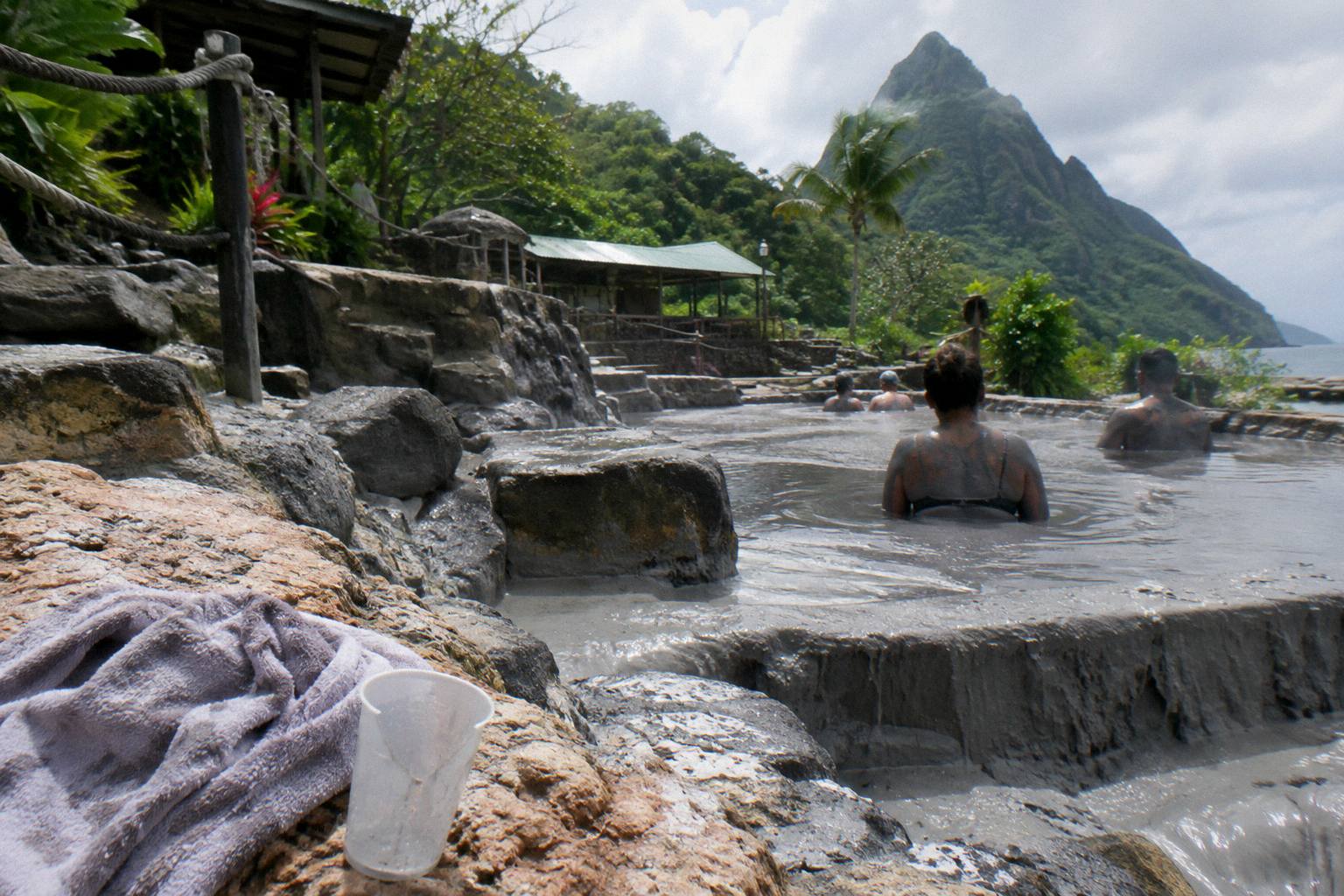
Do not build an itinerary around seeing ripe pods in a named month; ask the operator what the groves typically show instead. Do not assume December to April buys solitude; it buys weather, and crowd control comes from format, private or small group, and from timing around port days. Do read the cancellation line before the price line in any month from June to November, and treat the mud bath entrance of US$12 per person on the Sugar Beach product, plus the US$45 chocolate factory admission on the rum and chocolate pickup day, as separate line items rather than surprises. More of these are collected in what chocolate experiences cost in St Lucia.
One packing-level note closes the loop: whatever the month, the estate walk is outdoors on ground that can be damp, so the what to wear and bring guide matters as much in March as in October, for different reasons. Dry season asks for sun sense and water; wet season asks for shoes that grip and a light rain layer. Neither asks you to change the plan.
Common Questions About Visiting In The Right Month
When Is The Cocoa Harvest Season In St Lucia?
No official or primary source publishes cocoa harvest months for St Lucia, so no reliable calendar exists to book against. Estate sessions run year round on the booking calendar, and the grove walk, grafting demonstration and chocolate-making stages do not depend on ripe pods. Ask the operator what the groves typically show in your month.
What Are The Best Months For An Estate Visit In St Lucia?
December to April is the driest window, with monthly rainfall from about 65 to 130 mm and mean temperatures between 26 and 27.4 °C. That same stretch is the busiest and overlaps the main cruise season, so book ahead. May and early June offer a quieter shoulder with moderate rainfall.
Is Rainy Season A Bad Time For A Chocolate Tour?
No. The rainy season, June to December, brings brief showers rather than all-day rain, and the making stages happen under cover. Prefer sessions that state free cancellation up to 24 hours before start, and favour estate-based formats over boat or rafting combinations that add weather exposure.
When Is Hurricane Season In St Lucia?
Hurricane season runs June 1 to November 30, per the US National Hurricane Center. It overlaps the rainy season almost exactly. The tourism authority's Holiday Guarantee covers hurricane cancellation or reschedule before arrival at no cost, and most listed sessions carry free cancellation up to 24 hours before start.
Does It Get Too Hot For A Cocoa Estate Walk?
Not meaningfully by month. Mean temperatures stay between 26 and 28.2 °C all year, a range of barely two degrees, so heat is a constant you manage with timing and hydration rather than a factor that separates one month from another.
Do The Chocolate Sessions Run All Year?
Yes, the sessions run on the booking calendar throughout the year, including the Tree To Bar Estate day from US$130 per person, rated 4.7 from 587 reviews, with lunch included and free cancellation up to 24 hours before start. Start times are chosen on the booking calendar for every listed session.