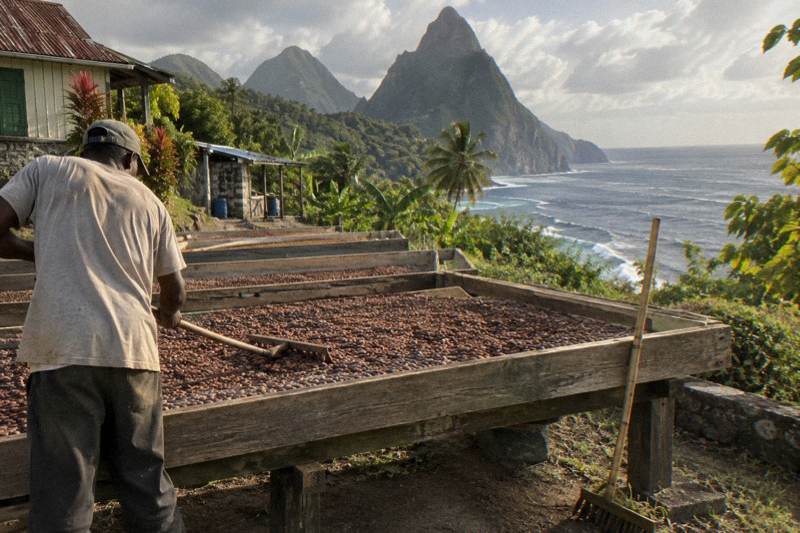
Cocoa On St Lucia: From Plantation Crop To Bean To Bar
Cocoa arrived on St Lucia in the 1660s, spent the banana boom in the background, and is now the island's most distinctive crop story. Here is the timeline, the estates, and how a visit turns the history into something you can hold.
Short answer
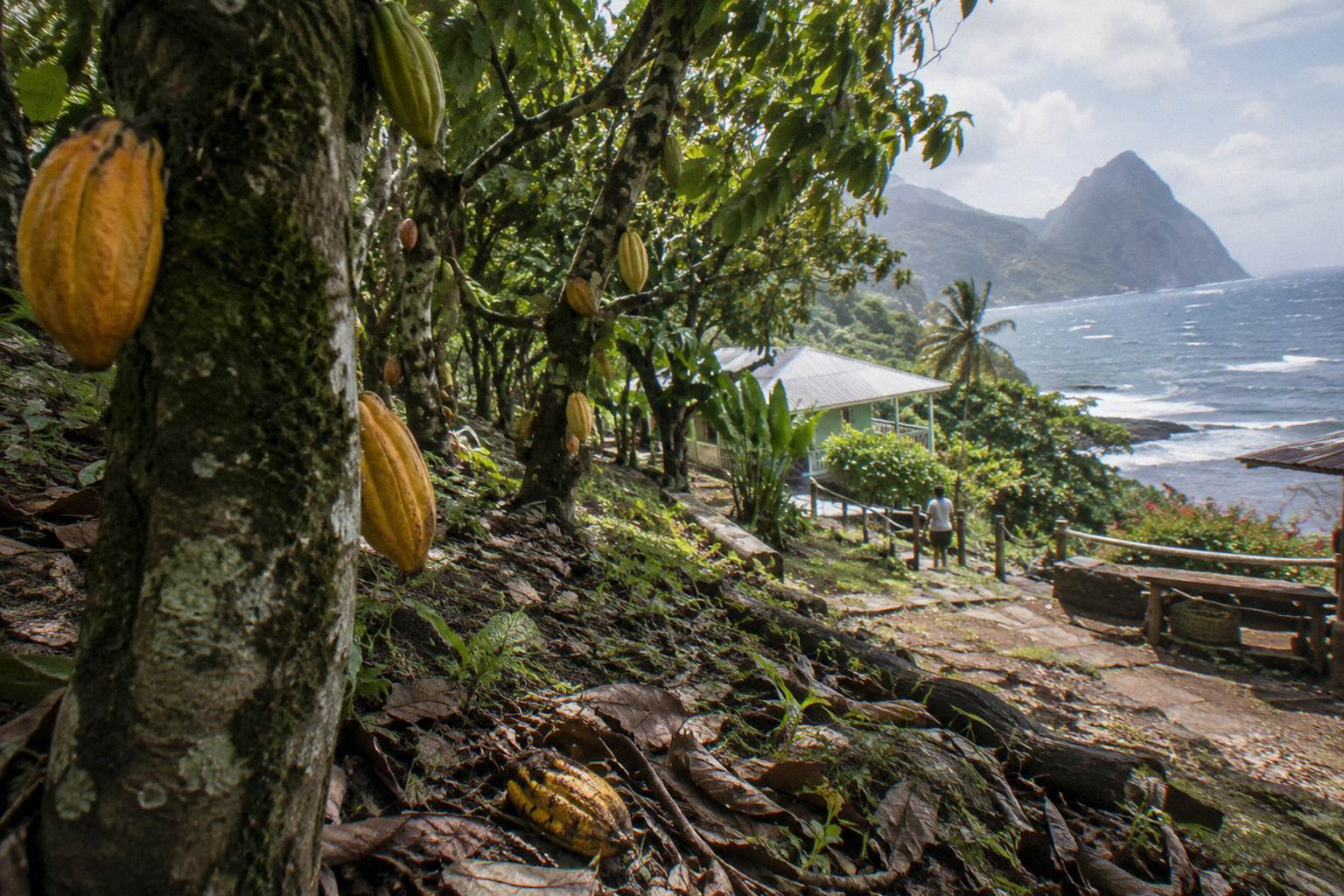
Cocoa reached St Lucia in the 1660s, faded behind bananas in the 1960s, and revived after the early 2000s trade collapse. Today St Lucia is a top nine exporter of 100 percent fine or flavour cocoa. You meet that story at estate sessions around Soufriere, from US$130 per person at the Rabot Estate.
Cocoa is the crop that keeps surviving its own obituaries on this island, and the clearest way to understand that story is to start with the estate sessions around Soufriere, where the history is still being worked rather than displayed. St Lucia Chocolate Tours tracks it from both ends: what the archived record says, and what you can actually book.
| Fact | Detail |
|---|---|
| Cocoa's arrival on St Lucia | The 1660s, per the FAO story on the island's cocoa revival |
| The banana peak | The 1960s, when cocoa was "playing second fiddle" in FAO wording |
| The turning point | Early 2000s EU trade-agreement changes, after which bananas "all but collapsed" |
| Standing today | Top nine exporter of 100 percent fine or flavour cocoa, per the International Cocoa Organization as quoted by FAO |
| The hotel link | A hotel chain is the largest cocoa market on the island, in FAO wording |
| The revival anchor | Hotel Chocolat bought the Rabot Estate in 2006, calling it the oldest working cacao farm on the island |
| The main visiting area | Soufriere, on the southwest coast, strongly associated with cacao growing |
| The shortest way in | The Tree To Bar estate session at Rabot, from US$130 per person, about 2.5 hours with lunch |
What A St Lucia Cocoa Plantation Actually Is
A working cocoa estate on St Lucia is a farm first and an attraction second, and the difference matters when you plan a visit. The oldest of them, the Rabot Estate, is described by its owner as the oldest working cacao farm on the island. The estates grow, harvest, ferment and dry beans, and the visitor sessions sit on top of that working operation, not instead of it. What you see changes with the farm calendar, not a fixed script.
The Saint Lucia tourism local farms page frames the island's cocoa farms alongside its distilleries as the agricultural half of a visit, and the Soufriere area is strongly associated with cacao growing in the same body's material. The soil is part of the reason. Cacao grown in volcanic soil is a repeated theme in the island's own culinary descriptions, and the southwest corner around the Pitons, Gros Piton at 798 m and Petit Piton at 743 m, inscribed by UNESCO in 2004, sits on exactly that geology.
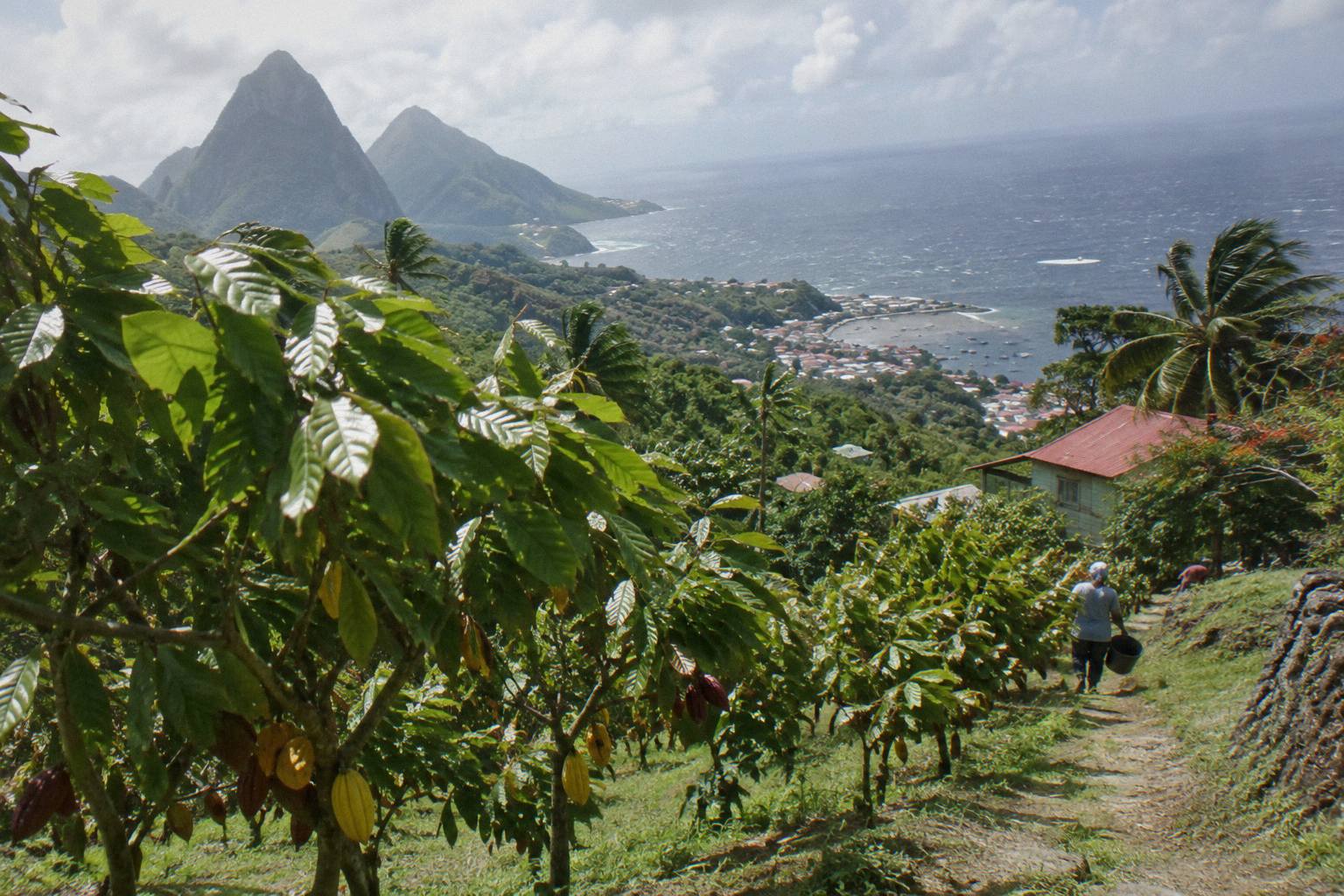
What that means in practice is that a plantation visit here is a two layer experience. The bottom layer is agriculture: groves, fermentation, drying, the grafting work that the FAO identifies as the preferred method of propagating cocoa on the island. The top layer is the part most visitors come for: making a bar of chocolate from beans that were a crop on that same hillside weeks earlier. The estate sessions listed here sit across both layers, and the length of the session usually tells you how much of the bottom layer it covers. Readers planning around the fullest version can start with the guide to the Rabot Estate visit and what the day looks like.
The Timeline: Cocoa From The 1660s To The Revival
Cocoa has been on St Lucia since the 1660s, dipped badly during the banana boom, and came back after the banana industry collapsed in the early 2000s. The FAO story on cocoa on Saint Lucia gives the whole arc in one document, including the detail that the island now ranks among the top nine exporters of 100 percent fine or flavour cocoa. It is a rare case of a small island's commodity history being both dramatic and checkable.
The middle chapters are the ones people skip. During the banana industry's peak in the 1960s, cocoa "found itself playing second fiddle" in the FAO's phrasing, and stayed there while bananas paid the bills. Then came the early 2000s, when EU trade-agreement changes hit the banana trade so hard that the industry "all but collapsed", again in the FAO's words. What followed is the part visitors now walk through: a cocoa industry the same body calls "on the up again", supported by training that reaches all the way down to field practice. FAO and the Ministry of Agriculture ran a workshop for over 40 farmers, agro-processors and extension officers covering pests and diseases, pruning, drainage, harvesting, pod opening, seed extraction, fermentation stages and signs, drying and bean storage. The full document is the FAO story on cocoa's revival on Saint Lucia.
| Period | What happened | Source |
|---|---|---|
| 1660s | Cocoa arrives on Saint Lucia | FAO |
| 1740s | Morne Coubaril's estate history places its origins here, under the Devaux family | Morne Coubaril Estate |
| 1960s | The banana industry peaks; cocoa "found itself playing second fiddle" | FAO |
| Early 2000s | EU trade-agreement changes; the banana industry "all but collapsed" | FAO |
| After the collapse | FAO and the Ministry of Agriculture train over 40 farmers and agro-processors; the cocoa industry is "on the up again" | FAO |
| 2006 | Hotel Chocolat buys the Rabot Estate, the oldest working cacao farm on the island in company wording | Hotel Chocolat |
| Today | Top nine exporter of 100 percent fine or flavour cocoa, top 23 producer of premium cocoa | International Cocoa Organization, as quoted by FAO |
The FAO also notes, without naming it, that a hotel chain is the largest cocoa market on the island, which is the commercial engine behind much of what a visitor can now book: the estate sessions buy beans, keep fermentation houses running and give farmers a domestic buyer. The revival, in other words, is not a museum piece. It is a supply chain you can stand inside for an afternoon.
Three of those picks map neatly onto the history. The "Project Chocolat Tree to Bar Tour at Hotel Chocolat Saint Lucia", from US$130 per person and rated 4.7 from 587 reviews, is the estate session at the farm the 2006 purchase revived. The "Hotel Chocolat Bean to Bar Experience in St. Lucia", from US$190 per person with private transport included, covers the same ground for cruise and north-based visitors who need the ride. And the "St Lucia Soufriere Private Chocolate Tour", from US$120 as a private visit for up to 4 guests with entrance fees paid separately, is the small-group-history route. See dates on the booking calendar before you plan around any of them; prices vary by date and group.
The Estates Around Soufriere And What Each Offers
Four estates carry most of the island's cocoa story, and each one offers something different: Rabot has the working scale and the Hotel Chocolat investment, Morne Coubaril has two centuries of the same family, and Fond Doux has the plantation-resort combination with its own fermentry house and chocolate shop. The listed bookable sessions concentrate on the first of these, but the others shape the region and are worth understanding before choosing a day.
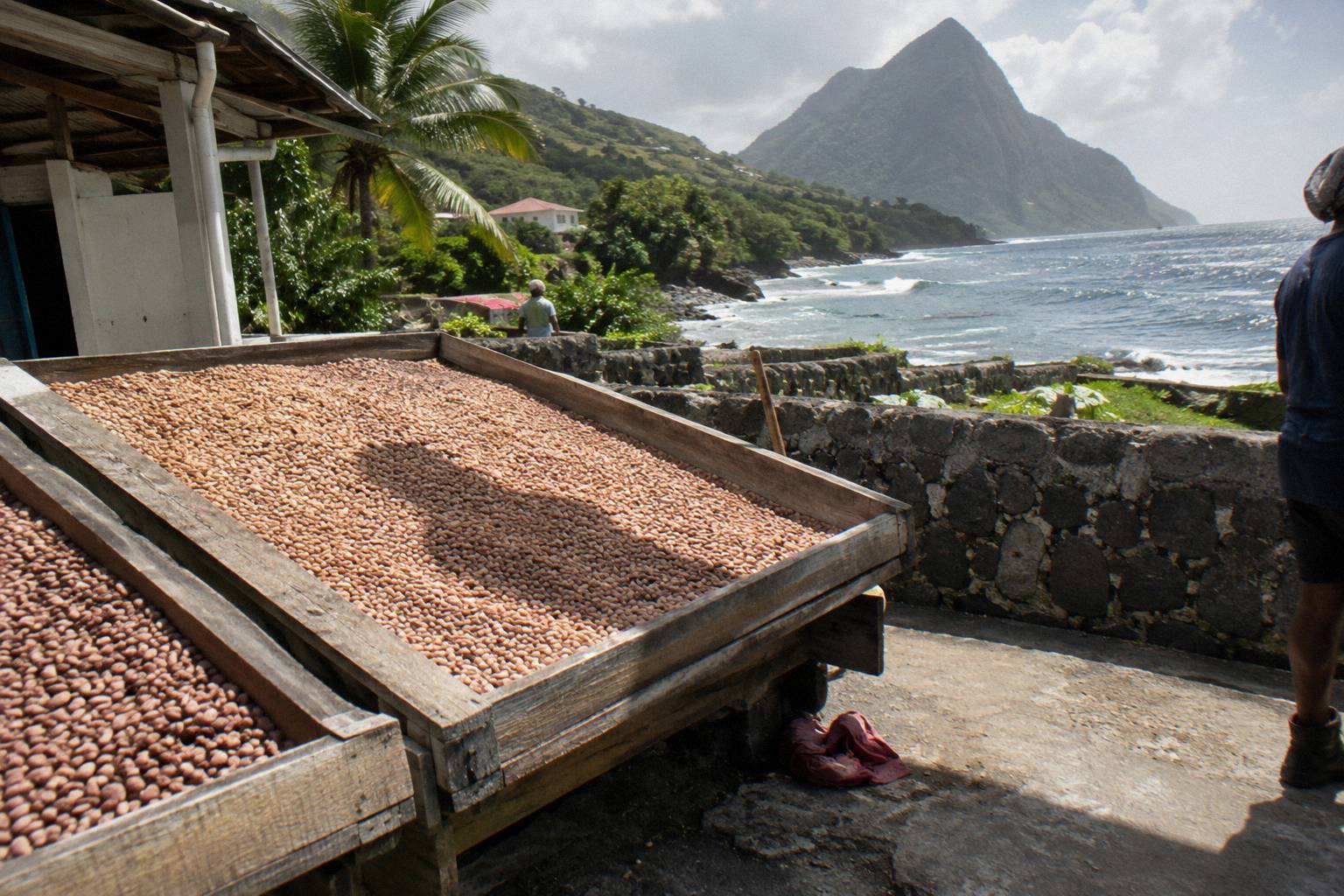
Rabot Estate is the anchor. Hotel Chocolat bought it in 2006, per the company's own cocoa estate page, and describes it as the oldest working cacao farm on the island, wording the Tourism Authority's farms page echoes. Project Chocolat, the visitor operation, sits across six acres of the estate and opens daily from 08:00 to 17:00, with walk-ins welcome for food and drink at The Cacao Bar, which overlooks the Pitons. The Morne Coubaril Estate page gives that estate's version of the past: the Devaux family has owned it for more than two centuries, with origins in the 1740s, and it teaches traditional sugar, cocoa and coconut processes in an authentic village setting. Fond Doux, for its part, is a restored 19th century colonial estate on what its resort calls a 250 year old working cocoa plantation, with a traditional cocoa fermentry house and a Plas Cacao shop.
| Estate | What the record says it offers | Status |
|---|---|---|
| Rabot Estate, Soufriere | Oldest working cacao farm on the island in company wording; bought by Hotel Chocolat in 2006; Project Chocolat on six acres, daily 08:00 to 17:00 | Working farm with a visitor operation and a bookable session |
| Morne Coubaril, Soufriere | Devaux family ownership for more than two centuries, origins in the 1740s; traditional sugar, cocoa and coconut processes; a 30 minute Historical Estate Tour | Estate with its own tour; no listed session names it |
| Fond Doux | Restored 19th century estate on a 250 year old working cocoa plantation; cocoa fermentry house; Plas Cacao shop; certified organic estate | Plantation resort; no listed session names it |
| Cacao Sainte Lucie at Canaries, Howelton Estate, Emerald Farm at Jade Mountain, Noble Tree Coffee and Cocoa | Named as cocoa estates in island material | Places, not listed products |
That last row is the firm boundary of a planning article: the listed bookable sessions do not name Morne Coubaril, Fond Doux or the other estates, so treat those as places to know about rather than sessions to assume. For the depth version of the 1740s story, see the guide to Morne Coubaril's cocoa history and visiting, and for the resort side, the Fond Doux plantation cocoa guide. If the choice between the two big estates is the actual decision, the Fond Doux or Rabot comparison works through it directly.
From Crop To Bean To Bar: What The Process Involves
The journey from crop to bar runs through harvest, pod opening, fermentation, drying and then the making session itself, and the Tree To Bar estate session compresses all of it into roughly 2.5 hours plus a market style lunch. Grafting, the preferred propagation method on the island per FAO, is part of what the session teaches. The Bean to Bar route skips the grove stages and goes straight to making a bar, which is why it runs shorter.
The agronomy is genuinely part of the visitor experience at Rabot. A rainforest tour of the cacao groves opens the Tree to Bar experience, followed by learning to graft a cacao tree and then making your own chocolate bar, with the market style lunch included, all per the Project Chocolat page. The behind the scenes version is what FAO's farmer training covers: opening pods and extracting seeds, the stages and signs of fermentation, drying and storage of beans. A visitor sees the front half of that chain on the grove walk and the back half at the making bench.
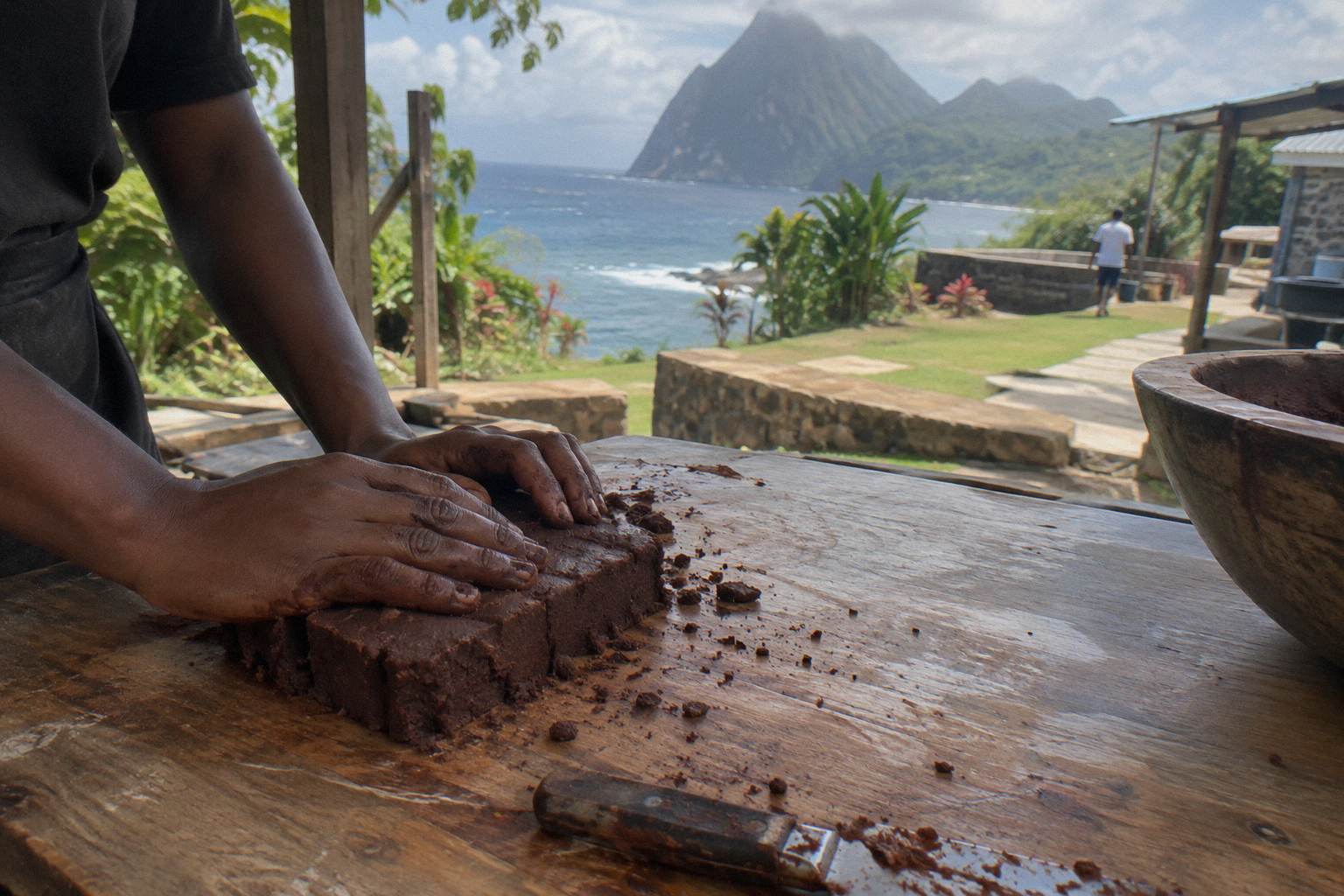
Cocoa tea belongs to the same story, though no listed session names it. FAO describes it as an island tradition that spans generations, made with freshly ground cocoa sticks and fresh spices such as nutmeg, cinnamon and bay leaf, and profiles a cocoa farmer who starts each morning, up since 3:30 am, with a cup of it. For the drink's own background, the guide to cocoa tea and where to try it covers the tradition. For the session itself, the stage by stage detail is in the Project Chocolat Tree to Bar session explained guide.
Fine Or Flavour Cocoa: Why The Beans Stand Out
St Lucia sits among the top nine exporters of 100 percent fine or flavour cocoa, with the United Kingdom as the main market, and among the top 23 producers of premium cocoa, figures the International Cocoa Organization supplies and FAO quotes. Fine or flavour status is the industry's marker for beans valued beyond bulk cocoa. On a small island it signals a crop that survived the banana collapse by moving up in quality rather than volume.
That standing is why the revival has commercial legs. A hotel chain being the largest cocoa market on the island, in FAO's wording, means a reliable domestic buyer for beans that otherwise face the export math of a very small producer. It also means the visitor sessions are plugging into a real supply chain: the micro batch chocolate sold at the estate shop is made from beans the farm grows and ferments on site, in the traditional fermentry tradition that Fond Doux also preserves.
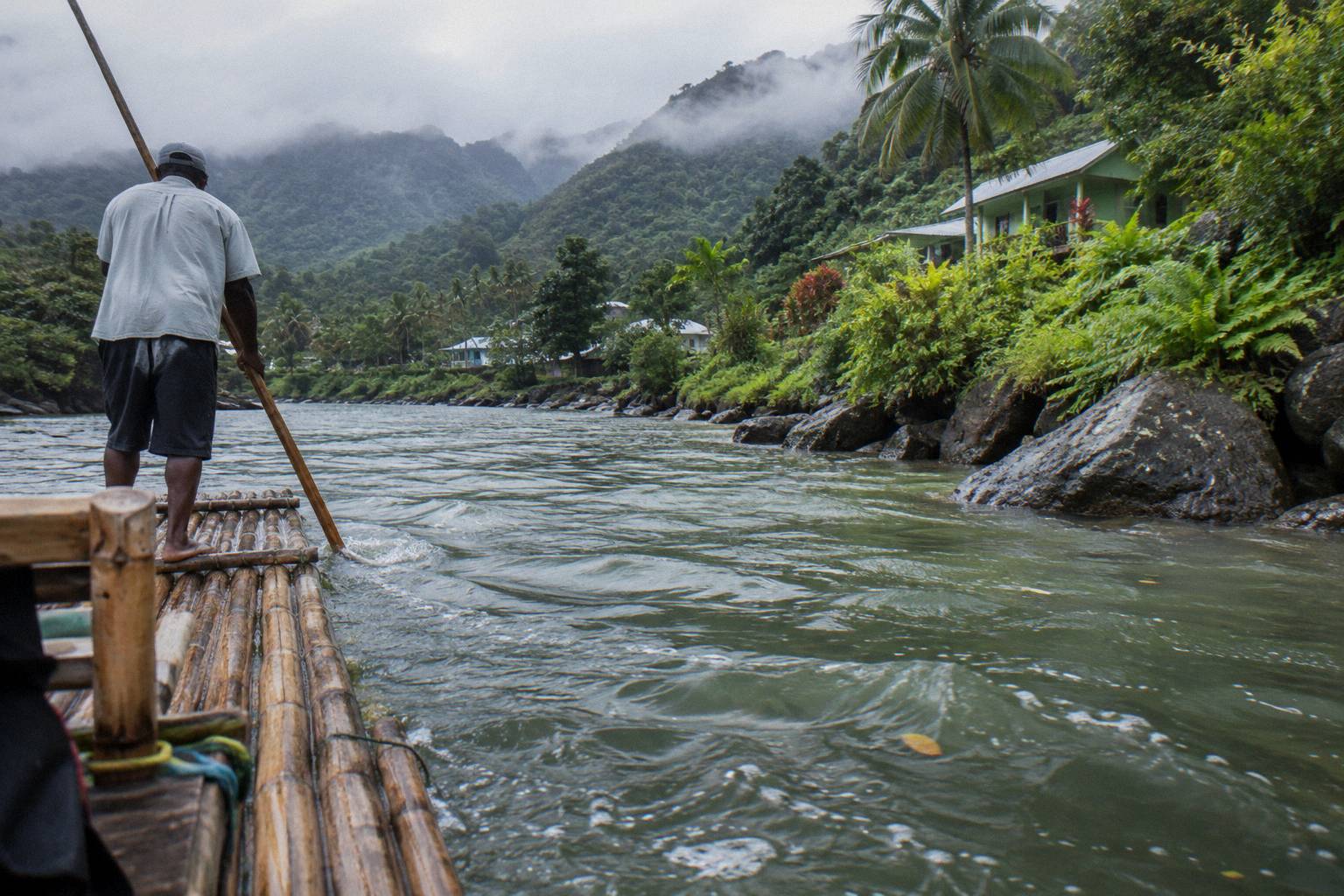
For a buyer, the practical translation is simple: the chocolate you make or buy on this island has a provenance story backed by an export standing, not just a gift shop tag. The fuller buying picture, brands and shops included, is in the guide to buying chocolate in St Lucia, and the cocoa estate day from Rodney Bay and the north guide covers reaching the estates from the main resort strip.
Choosing How You Meet The Story: Formats And Prices
The estate sessions split into three formats: the full estate session at Rabot with lunch, transport-included versions for visitors based far from Soufriere, and multi-stop day tours that pair the chocolate stop with rum, rafting or the mud baths. Prices run from US$130 per person for the core estate session upward, amounts are US dollars throughout, and each product's inclusions differ enough that the comparison below is worth a minute before you book.
The "Project Chocolat Tree to Bar Tour at Hotel Chocolat Saint Lucia", from US$130 per person, runs 2 hours to 3 hours, includes lunch and the chocolate making experience, excludes transportation, and carries a 4.7 rating from 587 reviews, the largest review pool in this category. The "Hotel Chocolat Bean to Bar Experience in St. Lucia", from US$190 per person for 2 hours, includes private air conditioned transport, entrance fees to the chocolate making experience, bottled water, soft drinks and a locally made Piton Beer, and excludes lunch. The private plantation visit, from US$120 with entrance fees paid separately, covers up to 4 guests over 4 hours.
| Product | Format | Duration | From price | Notes |
|---|---|---|---|---|
| Tree To Bar Estate, Lunch Included | Estate session at Rabot | 2 to 3 hours | from US$130 per person | Lunch and making experience included; transport excluded; 4.7 from 587 reviews; minimum age 8 |
| Bean To Bar, Private Transport | Experience with transport | 2 hours | from US$190 per person | Private vehicle, drinks and entrance included; lunch excluded |
| Private Cocoa Plantation Visit | Private, up to 4 guests | 4 hours | from US$120 | Entrance fees paid separately; bottled water included |
| Chocolate And Coffee Making, Lunch | Tour with lunch | 5 hours | from US$209 per person | Entrance fee, lunch and air conditioned vehicle included |
| Coffee Crop To Cup, 6-Hour Combo | Group, up to 30 guests | 6 hours | from US$250 per person | Snacks and coffee or tea included; meals and alcohol excluded; minimum age 13 |
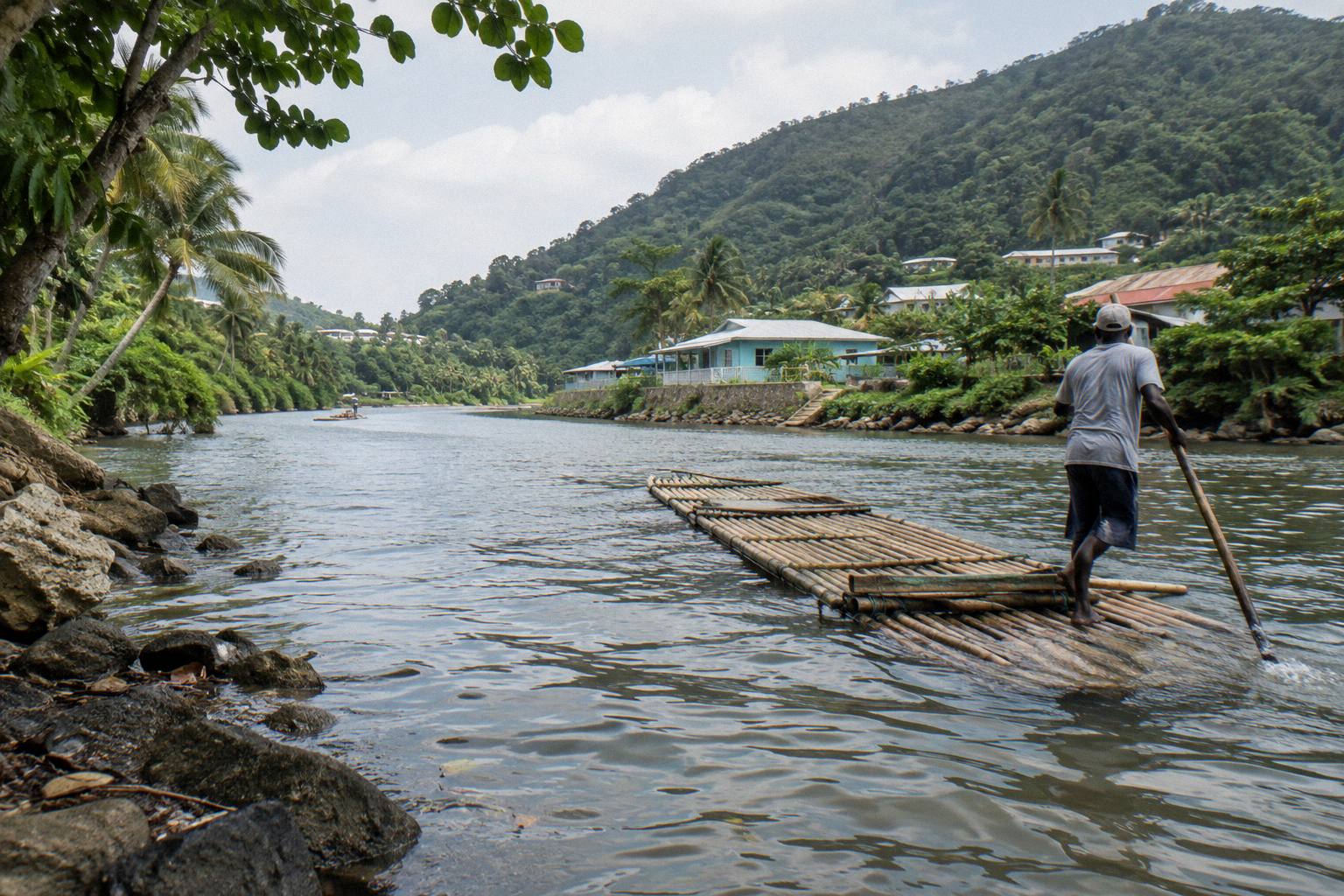
All amounts vary by date and group, and the booking page shows the price for the date you have in mind. Beyond the pure estate products, the multi stop days suit travellers who want the chocolate story as one chapter of a bigger Soufriere day. The "St Lucia Treasures (Chocolates, Rums & Rafts)" tour, rated 4.8 from 55 reviews, runs from US$149.50 per person for 6 hours in a small group of up to 6 guests, and includes a 60 minute bean to bar session at Cacao Sainte Lucie or Howelton Estate, a 30 minute rum distillery visit with sampling, and a privately guided 90 minute bamboo rafting glide down the Roseau river, with all fees included.
Longer still, the "Soufriere Excursion with Rum & Chocolate Tasting" from Sea Spray Cruises Ltd., from US$195 per person for 8 hours 30 minutes, includes a local lunch, rum punch and beer, all fees and taxes and an air conditioned vehicle, for up to 10 guests with no minimum age. The Sugar Beach day tour, from US$187.50 per person for 7 hours in a small group of up to 6, includes the 1 hour chocolate workshop entrance fee and excludes lunch and the US$12 per person mud bath entrance, which is paid on arrival. That US$12 figure belongs to that product alone.
Choosing between the estate session and a class only session is its own question; the Tree to Bar versus chocolate making class guide walks it through. If the timing of your trip matters more than the format, the cacao harvest and best months guide pairs this history with the island's calendar, and the what chocolate experiences cost guide takes the pricing picture across every category listed here.
Season, Weather And Timing A Plantation Visit
The dry season from December to April is the busiest and driest window for an estate visit, temperatures hold between 23 and 31 °C all year, and the rainy season usually brings brief showers rather than full days lost. Hurricane season runs June 1 to November 30. The island's tourism body operates a Holiday Guarantee covering hurricane cancellation or reschedule before arrival at no cost, so a wet-season booking is less exposed than it sounds.
The practical layer: the main cruise season in Castries runs October to April with as many as five ships calling in one day, which crowds the Soufriere stops on peak days, so an early start is the standard defence. Cruise passengers have their own planning page in the chocolate day from Castries port guide. What the weather never does is change the session itself, since the making stages happen under cover and the grove walk goes ahead in the conditions the day brings. Ask the operator about weather policy if your dates sit in the wetter months.
What Trips People Up Before You Book
The mistakes that cost money here are transport assumptions, fee blind spots and cancellation mismatches. The core estate session at Rabot excludes transportation, which surprises visitors who assume a Soufriere product comes with a ride; the private plantation visit and the Soufriere sights tour both carry entrance fees paid separately; and one catamaran day tour is all sales final with no free cancellation. Reading the inclusion lines before booking, not after, is the whole defence.
The specific traps, product by product. The Tree to Bar session's transport exclusion means you arrange your own way to Hotel Road, Rabot, Soufriere, or you book the Bean to Bar version that builds private transport in, from US$190 per person. The rum and chocolate pickup product's US$45 per person chocolate factory admission is not in its fare. The Sugar Beach day's US$12 mud bath entrance is likewise paid on arrival. And the "Hotel Chocolat, Catamaran Cruise, Sulphur Springs" day from Island Routes, from US$286.50 per person for 10 hours, is all sales final, so date certainty matters more there than anywhere else listed here. Almost everything else carries free cancellation up to 24 hours before the start.
A gentler trap is expectation. No source names the harvest months, and no session promises ripe pods or a specific stage of the crop; what the grove walk shows depends on the season and the farm. Book the session for the process and the history, both of which are constant, rather than for a particular sight on a particular day. For the pre booking decision itself, the booking ahead or on the day guide has the detail.
Common Questions About Cocoa Estates On St Lucia
When Did Cocoa Arrive In St Lucia?
Cocoa arrived on the island in the 1660s, per the FAO story on Saint Lucia's cocoa revival. It has been part of the island's agriculture ever since, through the banana decades and the current revival.
Why Did St Lucia's Cocoa Industry Decline And Come Back?
During the banana industry's peak in the 1960s, cocoa "found itself playing second fiddle" in FAO wording. After EU trade-agreement changes in the early 2000s the banana industry "all but collapsed", and the cocoa industry is now "on the up again", supported by farmer training from FAO and the Ministry of Agriculture.
What Is Fine Or Flavour Cocoa?
It is the industry category for cocoa beans valued for flavour characteristics beyond bulk cocoa. Saint Lucia ranks among the top nine exporters of 100 percent fine or flavour cocoa, with the United Kingdom as its main market, and among the top 23 producers of premium cocoa, per the International Cocoa Organization as quoted by FAO.
Can You Visit A Working Cocoa Plantation In St Lucia?
Yes. The Rabot Estate, described by its owner as the oldest working cacao farm on the island, runs visitor sessions through Project Chocolat across six acres, open daily 08:00 to 17:00. Bookable sessions include the Tree to Bar estate experience from US$130 per person.
What Is The Difference Between Tree To Bar And Bean To Bar?
Tree to Bar starts with a rainforest tour of the cacao groves and includes grafting before the bar making, running about 2.5 hours with a market style lunch. Bean to Bar is the shorter route that skips straight to making your own bar.
Who Buys St Lucia's Cocoa?
FAO notes that a hotel chain is the largest cocoa market on the island, without naming it. The United Kingdom is the main export market for the island's fine or flavour cocoa.