Morne Coubaril Estate: Cocoa History And What You Can Visit
The Morne Coubaril Estate sits above Soufriere and has been in the hands of one family for more than two centuries. This guide sets out what the estate is, what its 30-minute Historical Estate Tour involves, and how a history-focused stop compares with the chocolate-making sessions bookable around Soufriere.
Short answer
The Morne Coubaril Estate is an 18th-century plantation at Soufriere owned by members of the Devaux family for more than two centuries, with origins in the 1740s. Its Historical Estate Tour lasts 30 minutes and covers gardens, coconut de-husking, fresh cane juice and a taste of a freshly picked ripe cocoa bean. No bookable chocolate product here names the estate.
If the plan is a chocolate day built around Soufriere, start with the chocolate-making and rum pairing sessions hub, which gathers the bookable products that pair a hands-on session with a sightseeing loop. The Morne Coubaril Estate is one of the places travellers weigh when that day is being shaped, and it works differently from the bar-making sessions, so it deserves its own explanation.
| Fact | Detail |
|---|---|
| Location | Soufriere, on the island's southwest coast |
| Family history | Members of the Devaux family have owned it for more than two centuries |
| Origins | The estate's own history places them in the 1740s |
| Estate character | An 18th-century plantation setting |
| Signature tour | Historical Estate Tour, 30 minutes |
| Cocoa connection | Traditional sugar, cocoa and coconut processes; rum and chocolate tasting |
| Views | Ziplining and hiking with Piton views |
| Bookable sessions | No product here names the estate |
What Is The Morne Coubaril Estate?
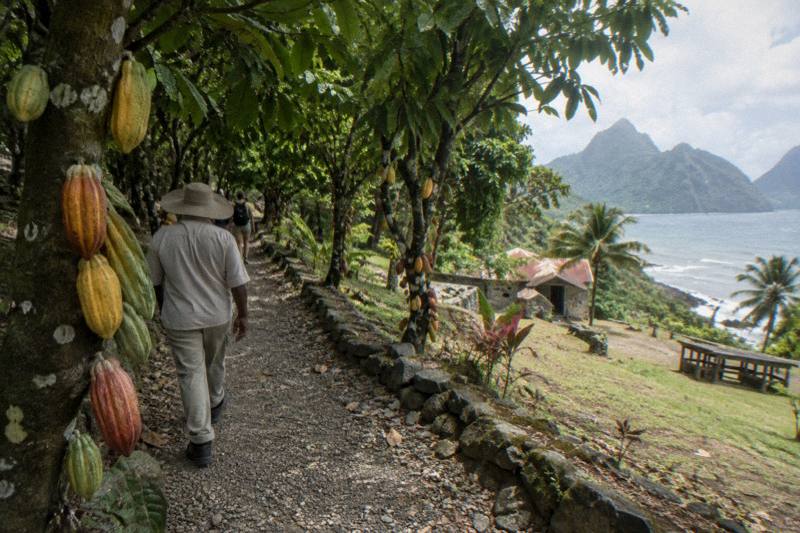
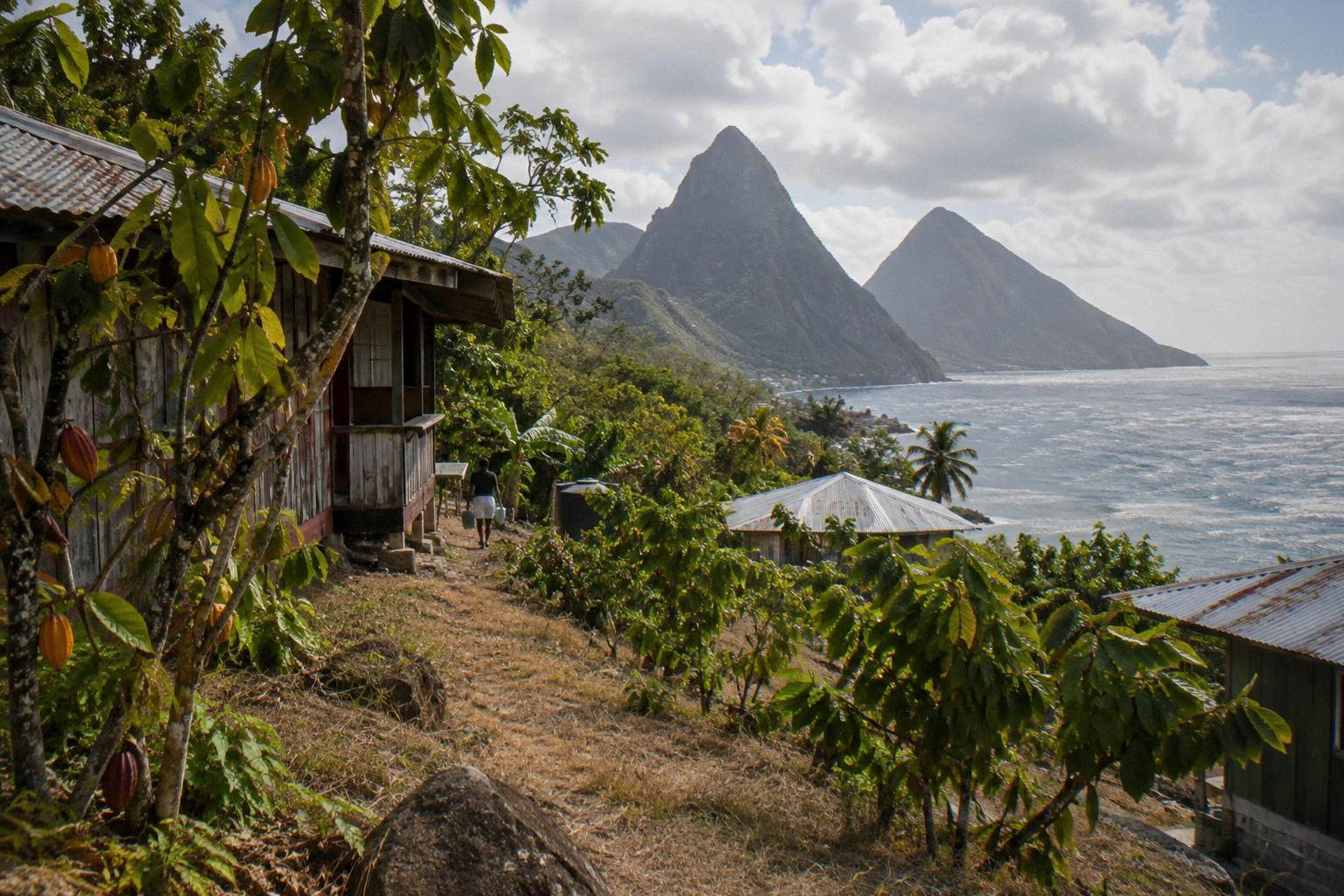
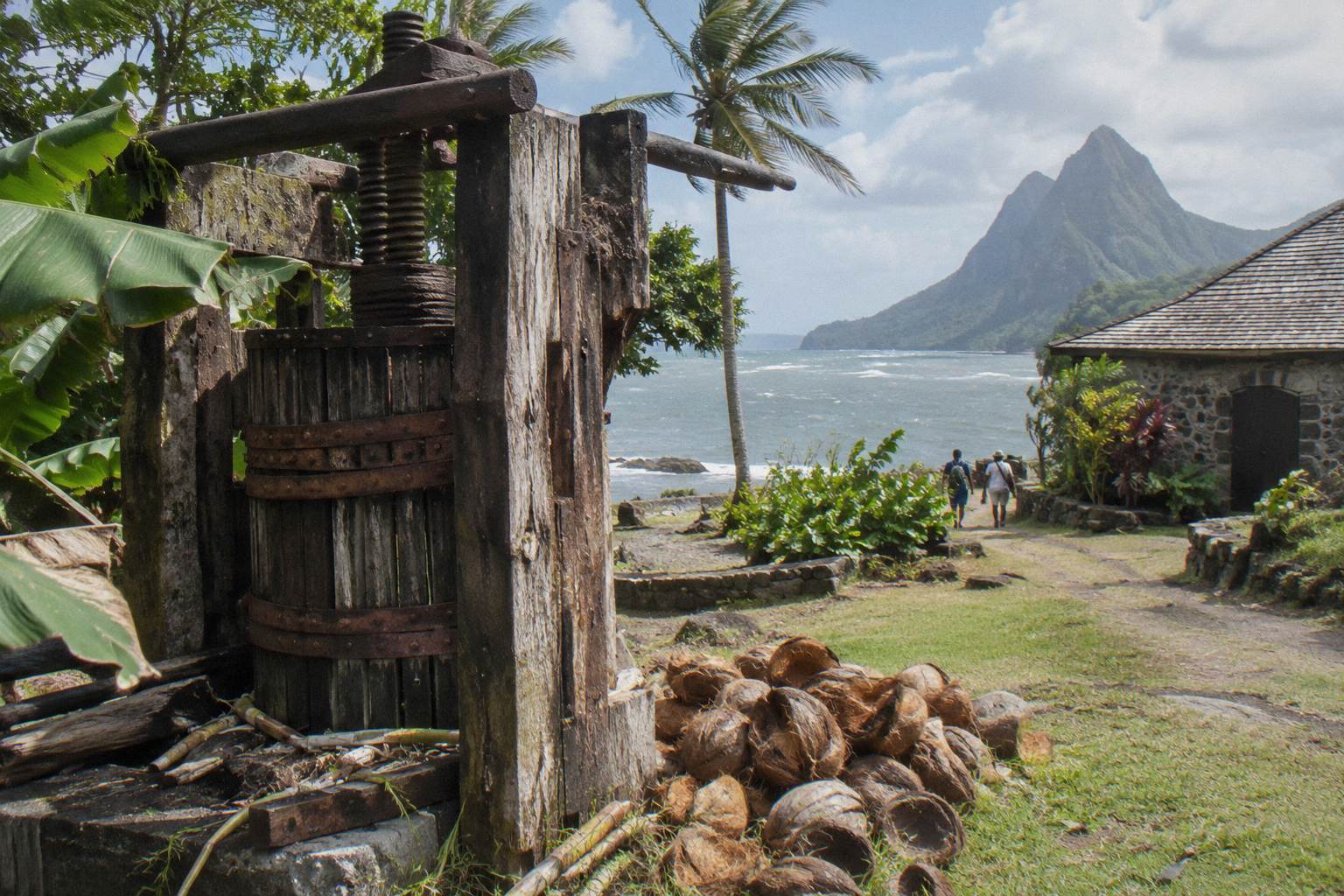
The Morne Coubaril Estate is a working heritage plantation located in Soufriere, Saint Lucia, that has been owned by members of the Devaux family for more than two centuries. The estate's own history places its origins in the 1740s, making it a long-standing example of the island's plantation past. It presents itself as an 18th-century plantation where visitors learn traditional sugar, cocoa and coconut processes in an authentic village setting. It is not a chocolate factory and not a chocolate school: the cocoa side of the estate is about how the crop was grown and processed across generations, not about tempering a bar with your own hands. That distinction shapes everything else on this page, including which products below are worth pairing with a stop here.
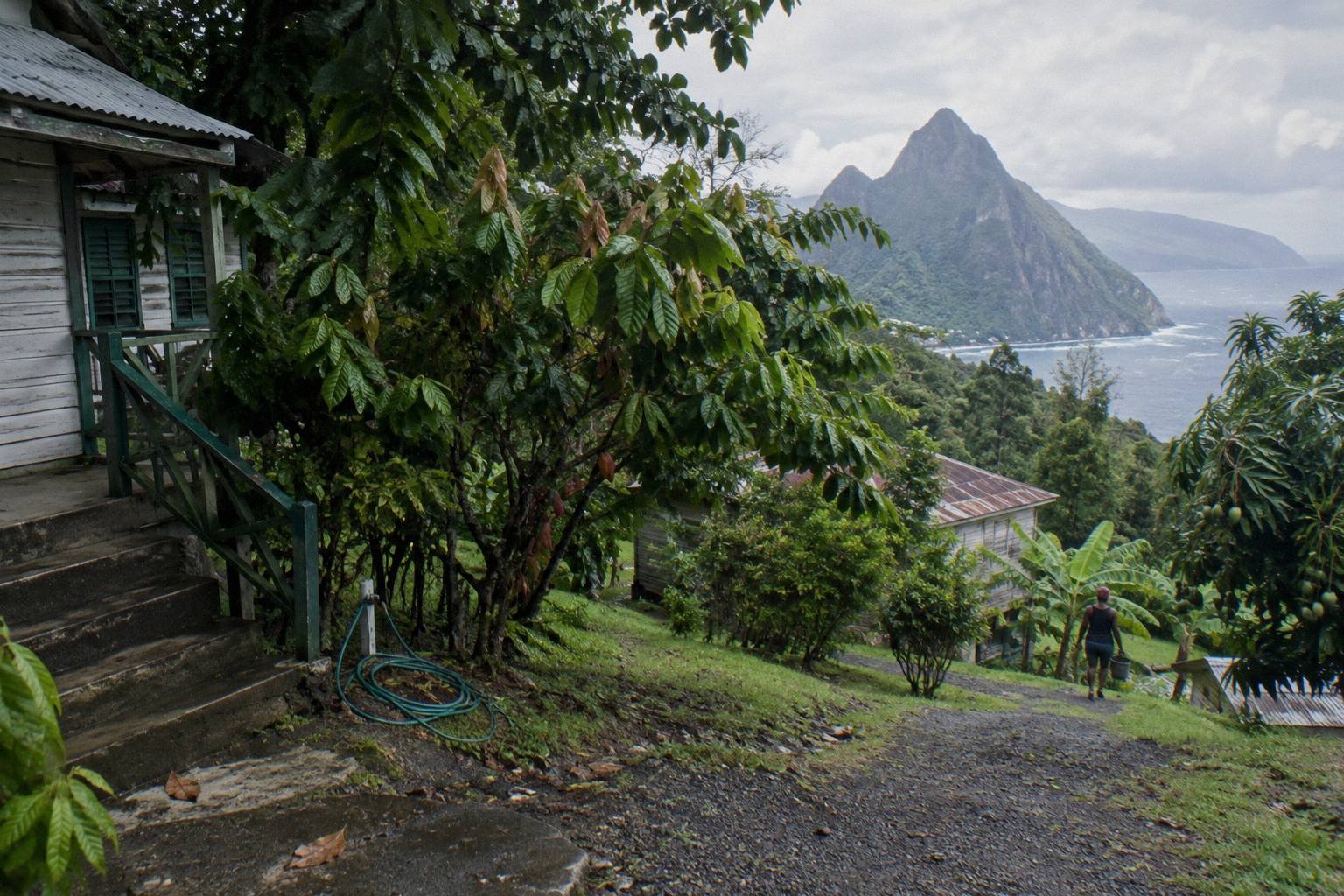
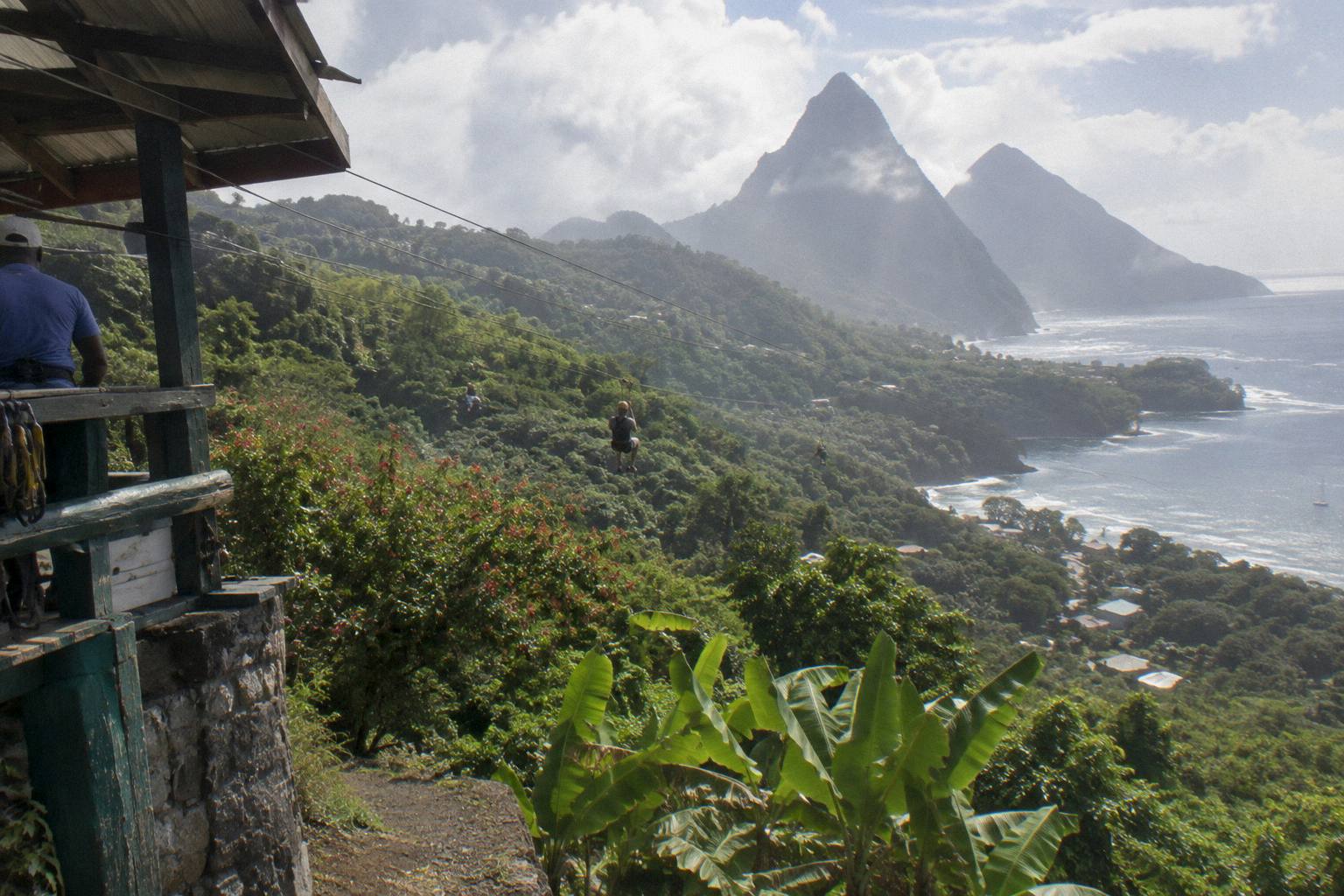
The estate sits in the Soufriere hills, in the part of the island most strongly associated with cacao growing, where the food the island serves includes cacao grown in volcanic soil. Gros Piton rises 798 m and Petit Piton 743 m nearby, a landscape inscribed by UNESCO in 2004, and the estate's zipline and hiking offer both run with Piton views. The estate's own history page is the primary source for the Devaux family ownership, the 1740s origins and the list of activities, from sugar and cocoa processing to ziplining, hiking to mineral pools and rum and chocolate tasting.
One scope note, stated once because it matters for planning: no bookable product here names Morne Coubaril. Every chocolate session, rum pairing and day tour listed here below runs at other venues or at venues the operator chooses on the day.
For readers also weighing the island's other heritage estates, the Fond Doux or Rabot estate comparison covers two alternatives with different characters, and what a Fond Doux visit offers breaks down that estate's cocoa fermentry house and shop.
How Does Cocoa History Unfold At Morne Coubaril?
Cocoa arrived on Saint Lucia in the 1660s, Morne Coubaril's origins sit in the 1740s, the banana era of the 1960s pushed cocoa into second place, and the early 2000s brought a collapse followed by a cocoa revival that continues today. That timeline, drawn from the FAO story on cocoa on Saint Lucia and the estate's own history, puts the estate in its proper context: it was established within roughly a century of cocoa's arrival, survived the decades when cocoa "found itself playing second fiddle" to bananas, and now sits in an island recognised by the International Cocoa Organization, as quoted by FAO, among the top nine exporters of 100 percent fine or flavour cocoa.
| Period | What Happened |
|---|---|
| 1660s | Cocoa arrives on Saint Lucia |
| 1740s | Morne Coubaril's origins, per the estate's history |
| 1960s | The banana industry's peak; cocoa plays second fiddle, in FAO wording |
| Early 2000s | EU trade-agreement changes; the banana industry all but collapses |
| 2000s onward | The cocoa revival; FAO and the Ministry of Agriculture run farmer workshops |
The FAO story adds texture that a first search rarely surfaces. FAO and the Ministry of Agriculture ran a workshop for over 40 farmers, agro-processors and extension officers covering pests and diseases, pruning, drainage, harvesting, pod opening, seed extraction, fermentation stages and signs, drying and bean storage. Grafting, the story notes, is the preferred method of propagating cocoa. The revival is technical and agricultural, not just marketing, and heritage estates like this one are part of how visitors encounter it.
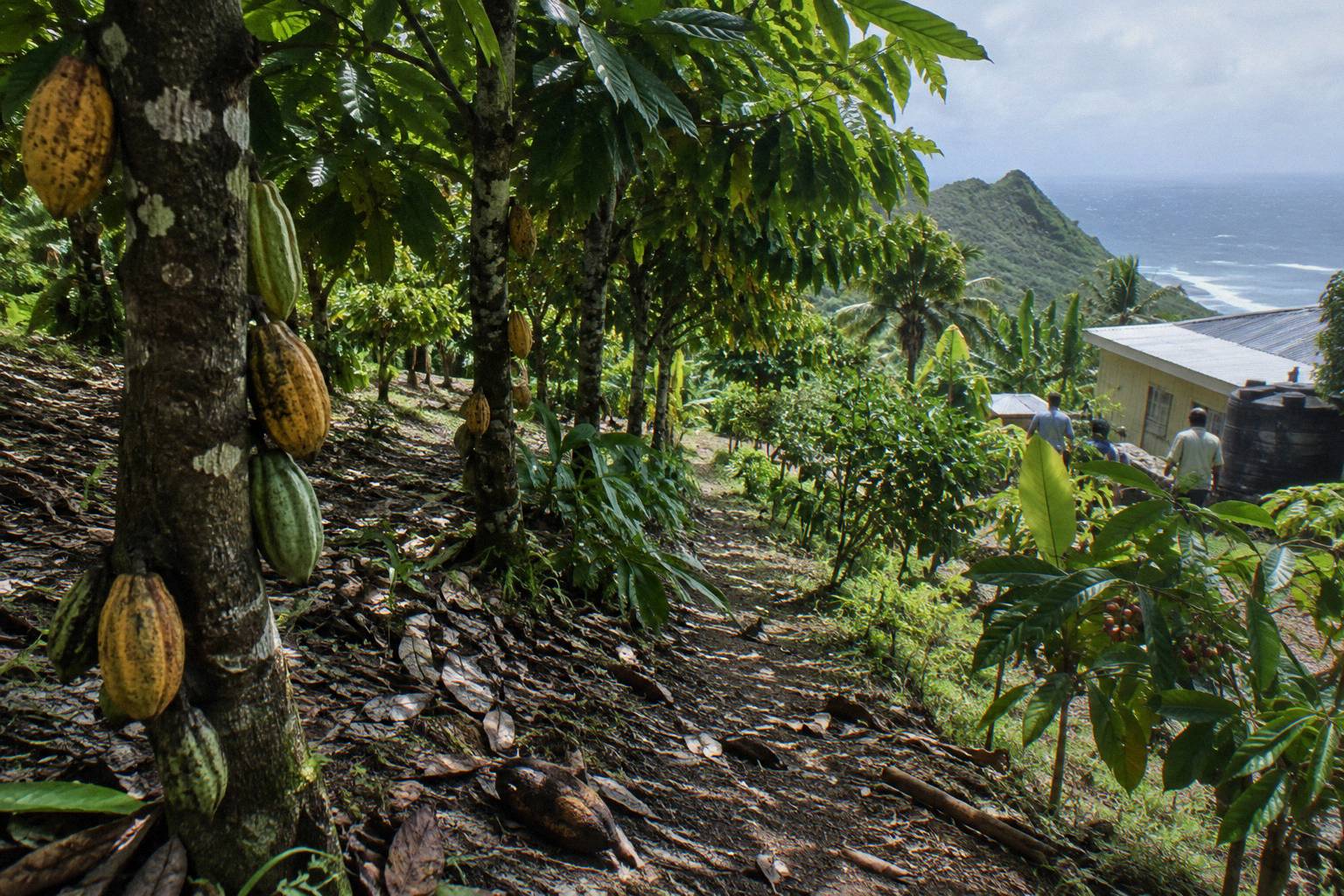
The estate's own Historical Estate Tour is the visitor-facing version of that history, compressed into 30 minutes. As the estate's Historical Estate Tour page describes it, the tour covers the gardens, de-husking a coconut, fresh cane juice, fresh coconut water and jelly, and a taste of a freshly picked ripe cocoa bean. It is short by design, which is exactly why it pairs well with a longer chocolate activity elsewhere in the day.
What Can You Actually Do On The Estate Grounds?
Beyond the 30-minute Historical Estate Tour, the 18th-century plantation grounds offer ziplining with Piton views, hiking to mineral pools, an authentic village setting, and rum and chocolate tasting, all in one location, so visitors can easily fill several hours without ever leaving the estate. The estate describes these as its core offers, and they cluster into two kinds of visits: a short heritage stop built around the tour and the tasting, or a longer half-day built around the zipline and the hike. Families with children often lean toward the zipline; readers of a chocolate site usually lean toward the tour plus tasting and then move on to a making session booked separately.
| Activity | What It Involves | Time Commitment |
|---|---|---|
| Historical Estate Tour | Gardens, coconut de-husking, fresh cane juice, coconut water and jelly, tasting a ripe cocoa bean | 30 minutes |
| Rum and chocolate tasting | Local rum alongside local chocolate, as the estate offers it | Short add-on |
| Ziplining | Lines with Piton views across the plantation grounds | Half-morning or half-afternoon |
| Hiking | Trails to mineral pools on the estate | Variable |
| Village setting | An authentic plantation village atmosphere between activities | Free-flowing |
Two practical cautions. First, the estate's tour fee is on its own booking page and may change, so check it directly rather than relying on any figure quoted second-hand. Second, what runs on a given day depends on weather and the estate's own schedule, so nothing here is a promise of a particular tasting or line being open.
For the chocolate half of the day, the bookable route is a Soufriere product, and the trio below is where most readers start: a chocolate-making tour with Soufriere sights, a private cocoa plantation visit, and a full rum-and-chocolate day with a meal included.
Each of those three runs in the Soufriere area, which is what makes an estate stop and a chocolate session realistic in one day. The Chocolate Making, Soufriere Sights tour runs from US$180 per person, picks up and drops off, carries complimentary water, soda and beer on an air-conditioned vehicle, and takes 3 to 6 hours depending on the option, with entrance fees paid on arrival at the sites. It suits a day that wants both a hands-on session and the Soufriere landmarks, and prices vary by date and group, so the booking page shows the price for the date.
How Does A Plantation-History Stop Differ From A Chocolate-Making Session?
A plantation-history stop explains how cocoa was grown, harvested and processed across centuries, while a chocolate-making session puts ingredients in your hands and ends with a bar you made yourself; the estate tour takes 30 minutes, the shortest bookable session runs about an hour, and the two answer different questions. The Historical Estate Tour is about context: gardens, cane juice, coconut, and a taste of a freshly picked ripe cocoa bean as the estate describes it. A making session is about output: roasting, grinding and molding, with a finished bar at the end.
| Dimension | Estate History Stop | Chocolate-Making Session |
|---|---|---|
| Core activity | Guided walk through gardens and traditional processes | Hands-on bar making |
| Typical length | 30 minutes for the Historical Estate Tour | About 60 minutes for the workshop portions of listed tours |
| Cocoa angle | How the crop was processed on a plantation | How beans become a bar |
| Take-home | Understanding and a tasting | A bar you made |
| Who books it | History and landscape minded visitors | Visitors who want to make something |
The listed tours make the session side concrete. The Tree To Bar Estate, Lunch Included product at Project Chocolat runs 2 to 3 hours, from US$130 per person, rated 4.7 from 587 reviews, and includes the cacao grove tour, a grafting lesson, the bar-making experience and a market-style lunch, with transport excluded. That is the island's fullest session. Shorter combinations, like the 60-minute bean-to-bar workshops inside the CHIC small-group day tours, fold the session into a broader loop. The Tree to Bar session explained stage by stage walks through what that fuller version involves.
Choosing between the two usually comes down to who is travelling. Minimum ages listed here run from all ages on several tours, 2 on the Marigot Bay shopping tour, up to 21 on the rum tour, and the estate's own activities carry their own age rules, so ask the operator when children are in the group. Visitors who care about the island's cocoa story often do both: a short history stop in the morning, a session in the afternoon.
Which Soufriere Chocolate Products Fit A History-Focused Day?
Three Soufriere-area products fit a history-focused day: the Chocolate Making, Soufriere Sights tour from US$180 per person with pickup included, the Private Cocoa Plantation Visit from US$120 for up to 4 guests over 4 hours, and the Rum And Chocolate Day, Meal Included tour from US$195 per person over 8 hours 30 minutes. Each pairs differently with an estate stop, and the table below lays out the details that matter. Amounts are US dollars.
| Product | From Price | Duration | Pickup | Ages | Cancellation |
|---|---|---|---|---|---|
| Chocolate Making, Soufriere Sights | US$180 per person | 3 to 6 hours | Pickup included | 6 and up | Free up to 24 hours before |
| Private Cocoa Plantation Visit | US$120 | 4 hours | Departs Soufriere | All ages | Free up to 24 hours before |
| Rum And Chocolate Day, Meal Included | US$195 per person | 8 hours 30 minutes | Departs Soufriere | All ages | Free up to 24 hours before |
The private plantation visit is the closest in spirit to a history day: private format, up to 4 guests, bottled water included, entrance fees paid by guests at the sites. The Rum And Chocolate Day, Meal Included tour, operated by Sea Spray Cruises Ltd., is the longest at 8 hours 30 minutes and includes rum punch, beer, a local lunch, all fees and taxes, and a restroom on board, which suits a day that wants the whole Soufriere sweep rather than a quick stop.
One warning worth its own sentence: none of these products names the estate, so if the estate itself is the priority, it needs to be arranged as its own stop and the chocolate session booked separately. Check availability on the private visit if a flexible, self-directed plantation day is the goal.
How Does An Estate Visit Fit With Other Soufriere Stops?
Soufriere packs an unusual number of stops into a small radius: the Pitons, the Sulphur Springs geothermal zone described as the Caribbean's only drive-in volcano, cocoa estates, and the town's waterfront, so an estate visit slots naturally into a loop rather than standing alone. The Saint Lucia tourism Sulphur Springs page describes driving right into the geothermal zone to see bubbling mud pools, steaming vents and volcanic landscapes, with mineral mud baths nearby, comfortable shoes, swimwear and a towel recommended. The Soufriere day trip with a chocolate stop guide maps that fuller loop.
The listed combined products show how operators bundle these stops. It is a model for how an estate-flavoured morning and an activity afternoon combine.
The Catamaran Cruise, Sulphur Springs product from Island Routes goes the other direction: a 10-hour day from US$286.50 per person, rated 4.2 from 19 reviews, beginning with a catamaran sail to Soufriere, a Hotel Chocolat visit with cocoa learning and bar making, an a la carte lunch with cocoa in every menu item, mud baths and a snorkel sail back along the Pitons. All sales are final on that product, a real difference from the 24-hour free cancellation on most of the listed tours. The Sulphur Springs and mud baths on a chocolate day guide covers that stop in depth.
When Is The Best Time To Visit An Estate Near Soufriere?
The driest and busiest season runs December to April, with average temperatures of 23 to 31 °C all year, so the trade-off is crowd against weather, and the rainy season from June to December brings brief showers rather than all-day rain. The Saint Lucia tourism seasons and weather page is the source for those figures, and it also notes a Holiday Guarantee under which a hurricane leads to cancellation or rescheduling before arrival at no cost. The Atlantic hurricane season runs June 1 to November 30, per the US National Hurricane Center's climatology.
| Season | Months | Character |
|---|---|---|
| Dry, busiest season | December to April | Driest weather, most visitors |
| Rainy season | June to December | Brief showers, quieter sites |
| Hurricane season | June 1 to November 30 | Overlaps the rainy season |
Cruise traffic compounds the busy season: the main cruise season in Castries runs October to April, and as many as five ships can call into Castries on one day, per the Saint Lucia Air and Sea Ports Authority. Soufriere estates feel that traffic in the middle of the day, so a morning estate visit before a session, or a session before a late estate stop, is the usual sequencing advice. For readers deciding how far ahead to commit, the booking ahead or on the day guide works through the trade-offs.
Weather and the operators decide what runs on any given day, and harvest timing is never a sure thing on any specific visit, so the fair framing is: the climate favours December to April, the calendar favours shoulder months, and the cocoa trees do what cocoa trees do.
What Does Cocoa Mean To The Island Beyond The Estates?
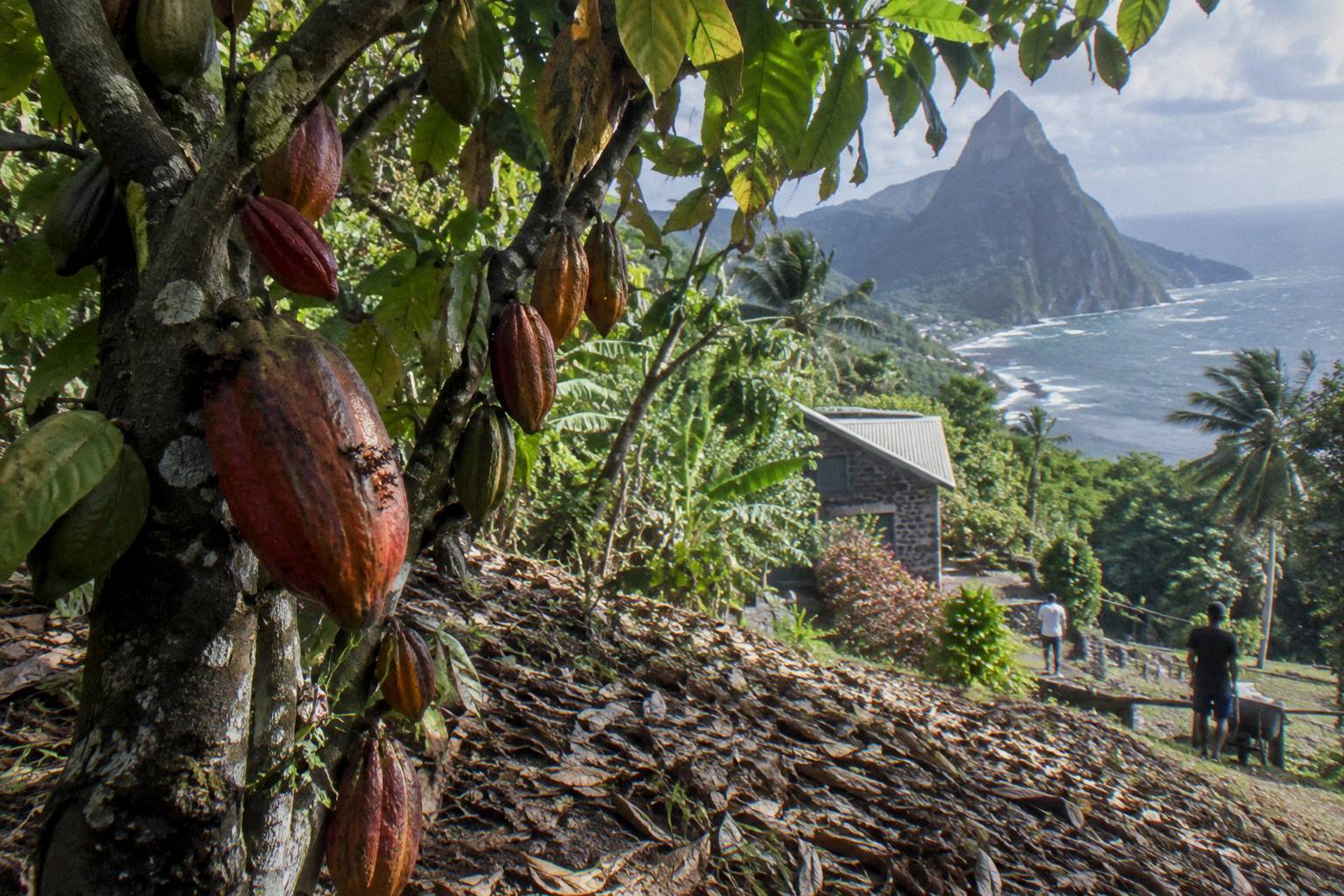
Cocoa on Saint Lucia is a living agricultural industry, not only a visitor attraction: FAO describes a revival driven by farmer training in grafting, fermentation and drying, an island standing among the top nine exporters of 100 percent fine or flavour cocoa, and a hotel chain acting as the largest cocoa market on the island. The FAO story on cocoa on Saint Lucia carries all of those points, and it frames cocoa tea as an island tradition spanning generations, made with freshly ground cocoa sticks and spices such as nutmeg, cinnamon and bay leaf.
That background changes how an estate visit reads. A heritage plantation stop at Soufriere is not a theme-park version of agriculture; it sits inside a real supply chain where the revival is recent, within the last two decades, and where the island's fine-flavour standing is measured by an international cocoa body. The cocoa on St Lucia, from crop to bean to bar guide traces that chain in full, and the St Lucia cocoa tea guide covers the drink that anchors the tradition.
For visitors who want the history without a making session, this is the strongest case for the estate: it is one of the few stops where the crop's centuries on the island are the whole point, from the 1740s origins through the banana decades to the present revival. St Lucia Chocolate Tours covers the bookable sessions; the estates are the backdrop that explains why they exist.
What Trips People Up Before You Book
Three things trip people up: assuming a chocolate session happens at the estate, underestimating how short the Historical Estate Tour is at 30 minutes, and forgetting that some listed products exclude entrance fees that are paid on arrival at the site. Each is avoidable with a minute of planning, and each has cost visitors a disappointing morning when missed. The estate and the sessions are separate bookings, and that is the single most important sentence on this page. Read it twice before the credit card comes out.
First, no bookable product here names the estate, so the estate stop and the chocolate session are arranged independently. Second, 30 minutes is a stop, not a half-day; if the plan is a full estate morning, the zipline and hike are what stretch it, not the tour. Third, entrance fees sit outside several fares: the Chocolate Making, Soufriere Sights product excludes entrance fees, paid at the sites on arrival, the private plantation visit leaves entrance fees to guests, and the Sugar Beach day excludes a US$12 per person mud bath entrance. Budget for those lines, and check the live price on the booking page for the date, since prices vary by date and group.
If the day is still taking shape, the trio below is where most Soufriere chocolate days begin, and each one can carry the estate stop alongside it.
Common Questions About Estate Visits Near Soufriere
Who Has Owned The Morne Coubaril Estate?
Members of the Devaux family have owned the estate for more than two centuries, with the estate's own history placing its origins in the 1740s.
How Long Is The Historical Estate Tour At Morne Coubaril?
The Historical Estate Tour lasts 30 minutes and covers the gardens, de-husking a coconut, fresh cane juice, fresh coconut water and jelly, and a taste of a freshly picked ripe cocoa bean, as the estate describes it.
Can You Make Chocolate At The Morne Coubaril Estate?
No product bookable here names the estate, so chocolate-making sessions around Soufriere are separate bookings, for example the Chocolate Making, Soufriere Sights tour from US$180 per person.
What Else Can You Do At The Estate Besides The Tour?
The estate offers ziplining with Piton views, hiking to mineral pools, an authentic village setting and rum and chocolate tasting.
When Is The Best Time Of Year To Visit An Estate Near Soufriere?
The driest, busiest season runs December to April, with average temperatures of 23 to 31 °C all year; the rainy season from June to December brings brief showers and quieter grounds.
Do Soufriere Chocolate Tours Include Entrance Fees?
It varies by product: some include all fees and taxes, while others, such as the Chocolate Making, Soufriere Sights tour, have you pay entrance fees on arrival at the sites, so check the product's inclusions before booking.